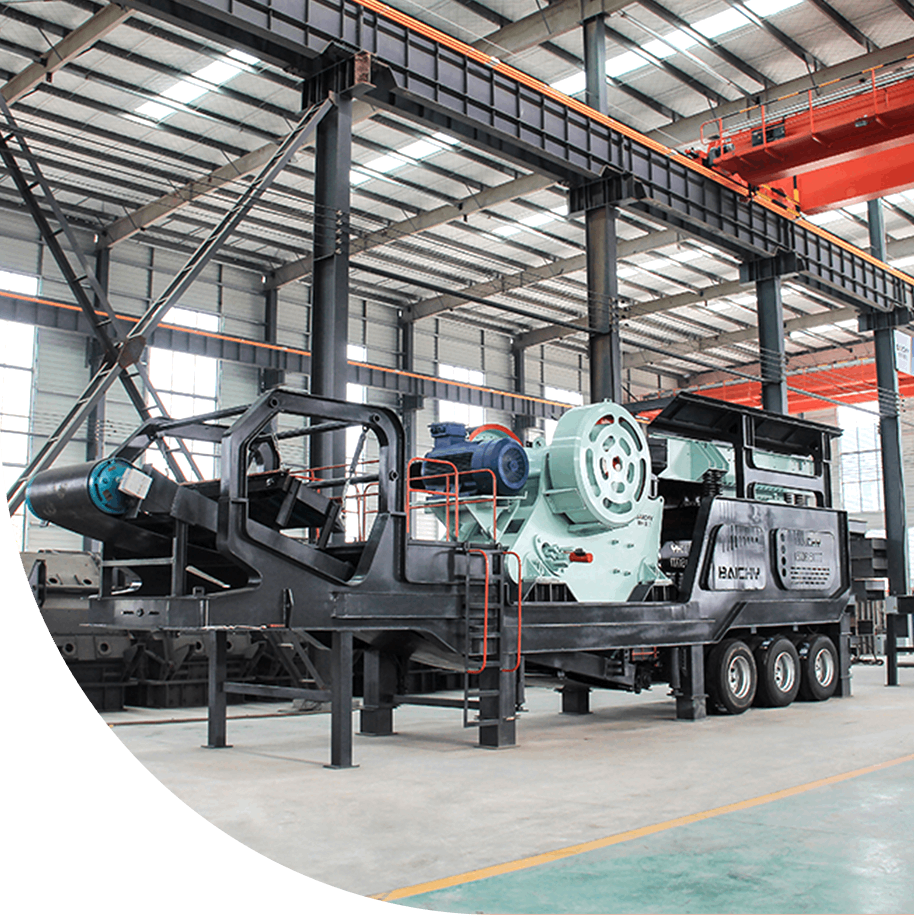
A large-opening impact crusher is a powerful crushing machine designed to handle high volumes of tough, hard, and abrasive materials. With a larger feed opening compared to standard impact crushers, these machines can process larger rocks, ores, and other materials more efficiently. Their robust design and high throughput make them ideal for primary crushing in demanding environments, such as in mining operations, construction sites, and aggregate production plants. The large opening allows for greater flexibility in material handling and higher productivity.
I. How Large-Opening Impact Crushers Work
Large-opening impact crushers operate on the same basic principle as standard impact crushers, but with the added advantage of a larger feed opening. Material is fed into the crusher through the large opening, where it is struck by a high-speed rotor and broken into smaller pieces. The material is then forced against impact plates or bars, further reducing its size. The size of the final product can be adjusted by altering the rotor speed or the distance between the impact plates. These crushers are particularly efficient for processing large rocks and other tough materials in primary crushing stages.

II. Why Choose a Large-Opening Impact Crusher?
A large-opening impact crusher is the ideal choice for high-capacity crushing needs. The larger feed opening allows it to process larger volumes of material, making it more efficient for heavy-duty applications. It provides a more reliable and effective solution for primary crushing, offering reduced downtime and better throughput. The high crushing capacity combined with the ability to handle tough materials makes this type of impact crusher perfect for industries that require robust and reliable equipment, such as mining and construction.
III. Applications of Large-Opening Impact Crushers
Large-opening impact crushers are widely used in mining, construction, and aggregate production. In mining, they reduce large ores and rocks into smaller, more manageable sizes for further processing. In construction, they break down large stones and rocks into aggregates for road-building, concrete production, and other infrastructure projects. These crushers are also used in recycling, where they process demolition waste and concrete into reusable aggregates, and in aggregate production, where they crush raw materials like limestone and granite into the required sizes for construction use.

IV. Advantages of Large-Opening Impact Crushers
Large-opening impact crushers offer several key advantages, including high crushing capacity and efficient material processing. The larger feed opening allows them to handle higher volumes of tough and abrasive materials, providing higher throughput. They are versatile, able to process a wide range of materials from hard ores to construction waste, and are known for their durability and reliability in demanding environments. With fewer moving parts, they are also relatively low maintenance, making them a cost-effective option for high-capacity crushing operations.
Regular maintenance is essential to ensure the longevity and optimal performance of large-opening impact crushers. Key tasks include inspecting and replacing the rotor and blow bars, which are subjected to wear during operation. Lubricating moving parts, such as the rotor and bearings, helps reduce friction and prevents excessive wear. Impact plates should also be regularly checked for wear, and the output size can be adjusted by modifying rotor speed or impact plate spacing. Cleaning the crusher is also crucial to prevent material buildup, which can affect performance.
Q: What are the advantages of using a large-opening impact crusher?
A:Large-opening impact crushers provide high crushing capacity, efficient processing of tough materials, versatility across various industries, and long-term durability with low maintenance costs.
Q: Where are large-opening impact crushers used?
A: They are commonly used in mining, construction, aggregate production, and recycling industries to process large rocks, ores, and waste materials.
Q: How should I maintain a large-opening impact crusher?
A: Regular maintenance includes inspecting and replacing rotor and blow bars, lubricating moving parts, checking impact plates, adjusting the output size, and cleaning the crusher to prevent material buildup.