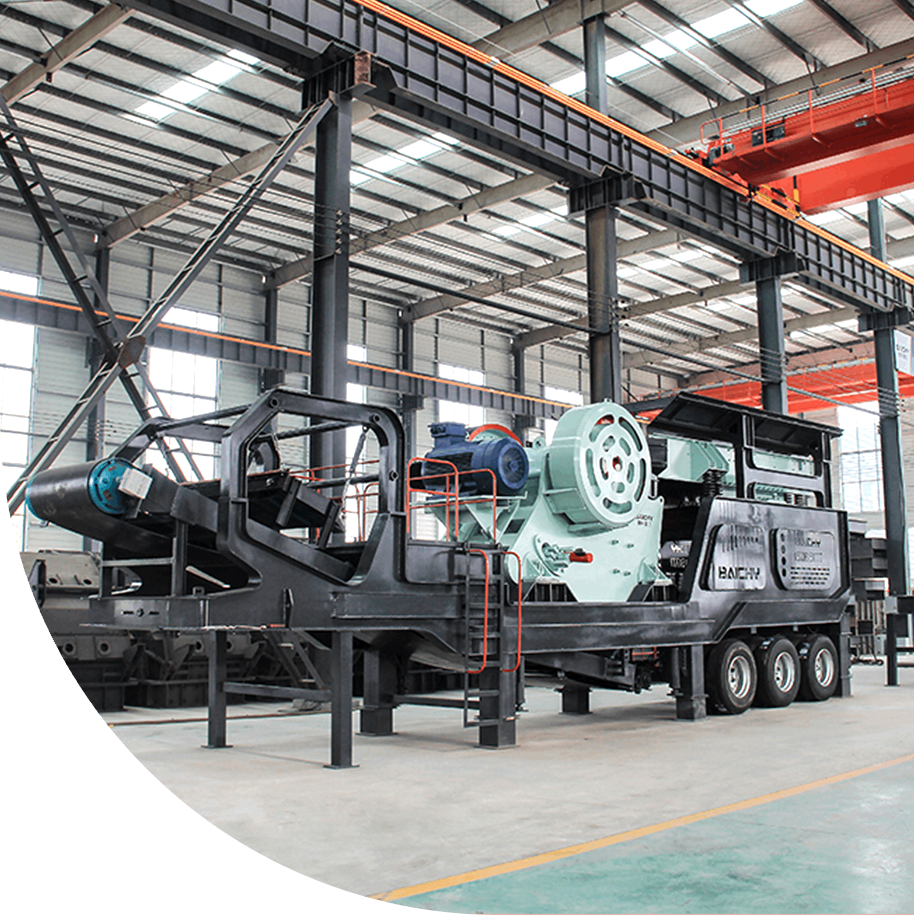
Mobile Plant Relocation: Move Time Is the Real Capacity
A mobile plant is bought on a tonnes-per-hour figure, and that figure describes a machine that never moves. On a contracting job the machine moves — repeatedly — and every hour spent walking, levelling, cabling and re-positioning is an hour of the project's production that the specification never counted. Which is why two identical plants on the same site can differ by a wide margin in what they actually produce over a season. The difference is not in the chamber. It is in how many hours the plant was standing still while it was being moved, and how many of those hours were avoidable.
This article treats relocation as a production cost, not a logistics detail: what a move is made of, which parts a buyer can influence at the specification stage, and what no machine design will shorten.
I. The Rated Hour Assumes a Stationary Machine
A capacity figure is a rate: tonnes per hour, at a defined feed, during an hour the plant is running. Nothing in it accounts for the hour before, when the plant was not running because it was being prepared, or the shift when it was not running because it was being walked to the next face.
• On a quarry with a fixed bench, this does not matter. The plant arrives once and the move is a rounding error over years. This is the case the brochure describes.
• On a contract with a defined area, it matters enormously. Demolition, road construction, pipeline work, quarry faces that advance: the plant follows the material, and the material does not wait.
• So the honest metric is per project, not per hour. Running hours multiplied by the rate, minus the hours consumed by relocation, gives what the machine will actually deliver before the contract ends. The second term is the one nobody quotes.
• And the error compounds. A plant that is slow to move gets moved less often, which means longer haul distances for the loader or the trucks. Relocation cost then reappears as hauling cost, in a budget line where nobody looks for it.

II. A Move Is Six Jobs, Not One
| Part of the move | Why it is underestimated | What can shorten it |
| Walking or towing | Assumed to be the whole job, and the only part on the drawing | Route prepared in advance; ground that carries the machine |
| Ground and gradient | Soft ground, a lip at a ramp, or a slope beyond what the drive can hold | Haul road maintenance; ramps built before the machine arrives |
| Setting up on the new face | Levelling, packing, and getting the feed and discharge aligned | Machine layout that does not need a survey to place |
| Cables, water, dust suppression | Disconnected and reconnected by hand, every time, usually at night | Quick couplers; on-board options where the duty allows |
| Discharge and stockpile position | Re-set after the plant is placed, because the pile grew where the plant now stands | Conveyor geometry decided with the move in mind, not after it |
Only the first row is what people mean by "relocating a mobile plant". The other five are what the crew actually spends the shift doing — and four of them are decided months earlier, in the layout and the specification, by someone who will never be on site at night in the rain.
• The plant does not move as a unit. A jaw plant, a screen and the conveyors between them each have their own relocation, and the slowest one sets the duration. Optimising the crusher's travel and ignoring the stacker's is a common way to save nothing.
• Setting up is where the hidden hours live. Levelling on a graded pad takes minutes. Levelling on a face that was cut yesterday takes the rest of the day, and the crew will do it with the plant's own hydraulics and whatever is under the tracks.
• And a move is not finished when the machine is standing. It is finished when the first tonne of correct product has been made and the belt is running in the right direction. Everything in between is relocation time.
III. The Hours Are in the Disconnect, Not the Walk
Ask a crew what takes longest about a move and the answer is rarely the travelling. It is the two ends: taking the plant out of service and putting it back into service.
• Every cable is a decision. Which is fed from where, which is interlocked, which must be isolated first. Documented single-point isolation and coded connectors cut that time; memory does not.
• Every hydraulic function that must be operated by hand is a person in the wrong place. Folding conveyors, raising the hopper wings and setting the discharge are all faster from a control point than from a spanner.
• Every component that must be re-levelled independently adds a second setup. A plant that is aligned as one assembly arrives ready; a plant that is three separate chassis arrives as three separate surveys.
• And the crew learning curve is a real cost. The first move on a new machine is slow. If the sequence is not written down, every move is the first move.
• So the specification question is not "how fast does it walk" but "how many separate actions does it take to put this plant into production on a new face". That number is what a project pays for, repeatedly.
IV. What You Are Actually Buying
• Tracked undercarriage buys independence, not speed. It moves the plant without a prime mover and without a road permit. It does not make the plant quick, and on soft ground it can make it slower than a towed unit with a prepared route.
• Wheeled chassis buys road speed and pays for it in ground preparation. The faster machine on the road needs a harder surface on site, and the time saved travelling reappears as time spent preparing.
• Integrated conveyors buy setup time. On-board discharge removes two machines and their alignment from the move. It also constrains where the plant can stand relative to the pile, which is a trade, not a gift.
• Remote tracking buys the crew's time, not the machine's. Walking from outside the frame keeps the spotter clear of the tracks, which changes the labour count on a move — often the larger cost.
• And none of it is free. Every one of these adds weight, cost and maintenance. The justification is the number of moves the project will make, and that number should be estimated before the specification is written, not discovered afterwards.

V. What Faster Relocation Will Not Fix
• A pile that surrounds the machine. If the stockpile has to be cleared before the plant can leave, the constraint is the stockpile, not the undercarriage. Discharge planning decides whether a move is a shift or a week.
• A site with one narrow access. Movement sequence becomes a traffic problem. No machine feature removes the need for a route plan.
• Permits and road moves. A plant that needs a permit or an escort is governed by the authority's calendar, not by its own hydraulics.
• Ground that cannot carry it. Soft, saturated or made ground will stop a tracked plant regardless of how the move is organised, and the answer is a haul road, not a bigger machine.
• And a plant that is too big for the site. If the plant occupies most of the working area, relocation is always slow, because there is nowhere to put material while it happens.
VI. What to Ask Before You Specify
• How many moves the project will make, and over what area, so the move can be costed against the production it displaces.
• The sequence for putting the plant into production, written down, with the actions that need a person outside the cab.
• What has to be disconnected and how — power, water, dust suppression, interlocks — and whether isolation is single-point.
• Whether the discharge arrangement survives the move, or has to be re-set after every repositioning.
• What ground the undercarriage needs, and what happens to it on the surface my site actually has.
• Whether the whole train can be moved as one, or whether each chassis is a separate relocation with its own alignment.
Frequently Asked Questions About Plant Relocation
Q: How long should a move take?
A: There is no universal figure, and anyone quoting one without knowing the site is guessing. What can be compared is the number of separate actions the job requires.
Q: Is a tracked plant always faster on site than a wheeled one?
A: Not on travel. It wins where there is no road, no prime mover and no permit — which is most working faces. On a prepared haul road a wheeled unit can be quicker, and its limit shows up in ground preparation instead.
Q: Does a bigger plant move slower?
A: Usually yes, and for a reason that is easy to miss: a bigger plant leaves less room on the face for the material it produces, so the pile has to be managed around it. Relocation time grows with the site constraint, not only with the machine.
Q: Can relocation time be reduced later?
A: Partly. Quick couplers, a documented sequence and a prepared haul road are retrofittable and cheap. Changing the layout, conveyor geometry or undercarriage is not, which is why those belong at the specification stage.
For mobile crushing and screening plants, see the mobile equipment range.