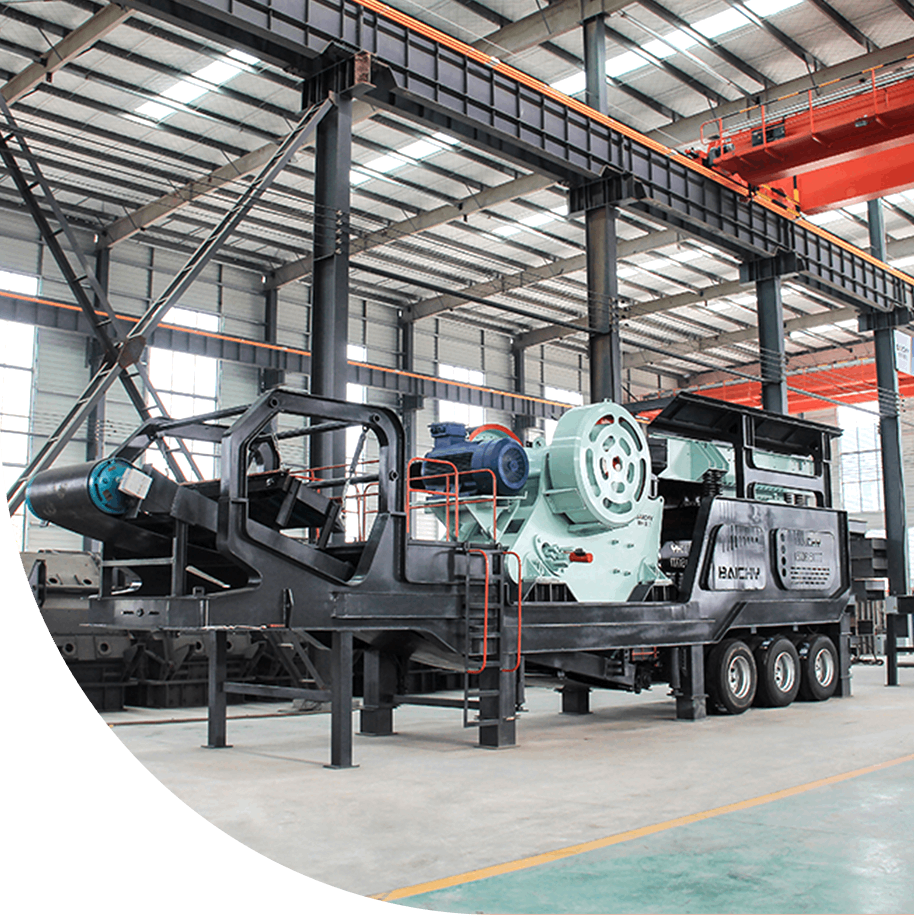
The vibrating feeder is a crucial component for material handling in mining, construction, and aggregate production. It is designed to transport bulk materials evenly from hoppers, storage bins, or stockpiles to crushers, screens, or conveyors. The vibration mechanism ensures a stable material flow, preventing clogging and uneven feeding. Its robust steel construction and reinforced frame allow it to withstand heavy-duty operations in harsh environments, making it suitable for both temporary job sites and permanent crushing lines.
I. High-Capacity Feeding Performance
Equipped with adjustable vibration motors, the vibrating feeder can handle feed rates from a few tons per hour to several hundred tons per hour, depending on material type and application. Operators can fine-tune the vibration frequency and amplitude to control the flow precisely, ensuring optimal feeding for jaw crushers, cone crushers, or impact crushers. This high-capacity performance reduces idle time in downstream equipment, maximizing the overall throughput of the production line.
II. Durable and Reliable Design
The feeder’s structure is made of high-strength steel and reinforced wear plates, which can resist abrasion from hard or coarse materials such as granite, basalt, or iron ore. Bearings, springs, and vibratory motors are selected for long life and high reliability under continuous operation. The feeder is also designed for quick inspection and maintenance, with easily accessible components, allowing operators to perform routine checks or replace wear parts without extended downtime.
III. Precision Material Control
A key advantage of the vibrating feeder is precise feed control. Adjustable vibration parameters allow operators to match the feed rate to the crusher’s capacity and material characteristics. For instance, fine aggregates require slower, uniform feeding to prevent oversize material from jamming the crusher, while coarse ores benefit from higher feed rates for maximum throughput. This precision ensures consistent particle size in the output, reduces material waste, and improves the efficiency of the entire processing line.
IV. Flexible Applications
Vibrating feeders are versatile and suitable for a wide range of bulk materials, including sand, gravel, coal, limestone, ores, and recycled construction debris. They can operate in open-pit quarries, closed mining tunnels, or on mobile crushing lines. The feeder can be integrated with belt conveyors, jaw crushers, impact crushers, cone crushers, and screening machines, forming a complete and seamless feeding system for industrial, construction, or mining projects.
By providing continuous, even material flow, the vibrating feeder minimizes downtime caused by uneven feeding, blockages, or manual adjustments. Its energy-efficient design consumes minimal power while maintaining stable vibration. Easy access to wear parts and vibration motors reduces labor and maintenance costs. Overall, the vibrating feeder improves operational efficiency, enhances crusher productivity, and contributes to cost-effective material processing on-site.
Frequently Asked Questions About vibrating feeder
Q: How does the feeder improve production efficiency?
A: By ensuring consistent material flow, it reduces downtime, prevents blockages, and stabilizes downstream crushing operations.
Q: Can the feed rate be adjusted?
A: Yes. Vibration frequency and amplitude are adjustable to control the material flow according to production needs.
Q: Where is a vibrating feeder commonly used?
A: It is widely used in mining, quarrying, construction, and aggregate processing lines to feed crushers and screens efficiently.
Enhance Your Material Handling Efficiency Today – Contact Our Experts for Customized solutions.