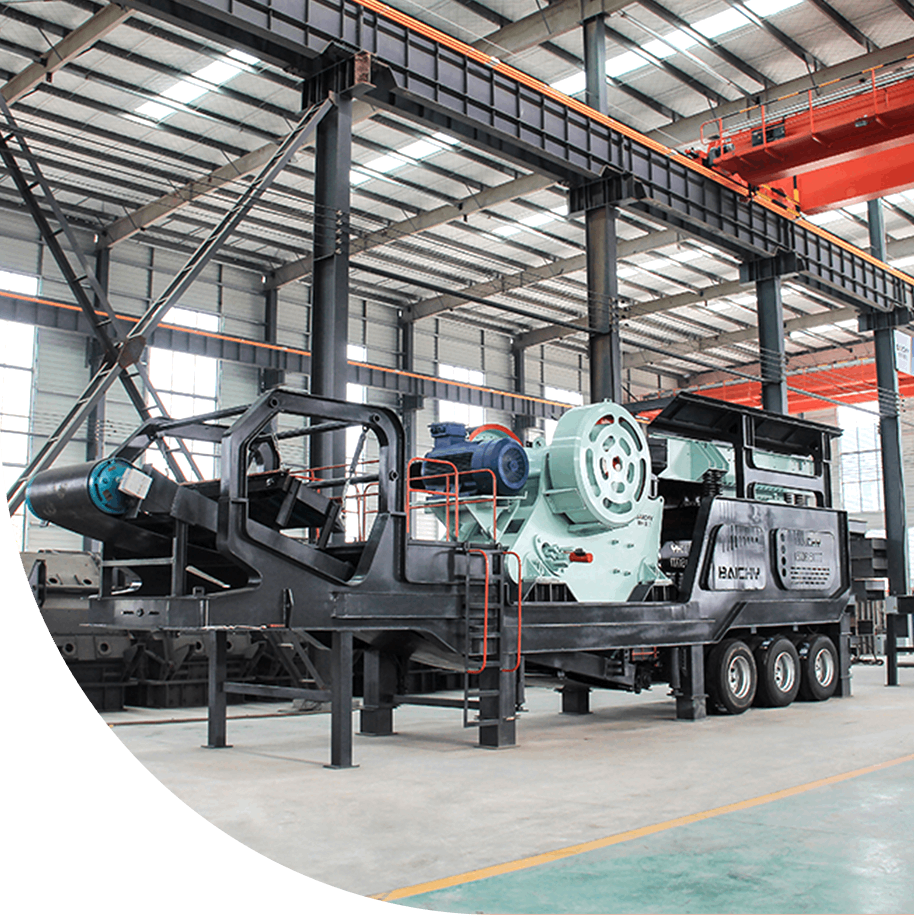
Double rotor crushers, also called two-stage crushers, use high-speed rotors with hammers or blades to impact and crush materials. Double roll crushers consist of two counter-rotating rolls that compress and shear the material. Understanding their working mechanisms is essential for selecting the most suitable equipment for specific industrial applications.
I. Crushing Mechanism Comparison
Double rotor crushers rely on high-speed impact forces to break rocks, achieving high reduction ratios and fine particle sizes. Double roll crushers use compression and shear forces, producing more uniform, coarser materials. The choice of mechanism affects the final product size, shape, and material gradation.
II. Material Suitability
Double rotor crushers are suitable for medium-hard to hard materials, including coal, limestone, and small-sized ores, especially when fine crushing is required. Double roll crushers perform well with soft to medium-hard materials such as clay, coal, and friable ores, but may struggle with highly abrasive or very hard rocks.
III. Efficiency and Production Capacity
Double rotor crushers generally provide higher throughput and finer output, suitable for high-capacity industrial operations. Double roll crushers deliver stable, uniform particle sizes with lower energy consumption for smaller-scale or specialized operations. Production requirements and desired output characteristics guide the choice between the two types.
IV. Maintenance and Operational Considerations
Double rotor crushers have more moving parts, requiring regular inspection, rotor balancing, and wear part replacement, but they offer flexible adjustment for particle size. Double roll crushers are simpler, easier to maintain, and offer lower operating costs, though they may require more frequent roll surface adjustments for uniform output.
When choosing between double rotor and
double roll crushers, consider material hardness, desired product size, production volume, energy efficiency, and maintenance capacity. Double rotor crushers are ideal for medium-hard materials needing fine crushing, while double roll crushers suit soft to medium-hard materials for coarser, uniform output. Proper selection ensures productivity, reduced downtime, and cost-effectiveness.
Frequently Asked Questions About Double Rotor Crushers and Double Roll Crushers
Q: What is the main difference between double rotor crushers and double roll crushers?
A:Double rotor crushers use high-speed impact to crush materials, producing finer particles, while double roll crushers use compression and shear forces to produce coarser, uniform output.
Q: Which crusher is better for hard and abrasive materials?
A: Double rotor crushers are more suitable for medium-hard to hard materials, whereas double roll crushers are ideal for softer materials.
Q: How does maintenance differ between the two crushers?
A: Double rotor crushers require more maintenance due to moving parts and rotor balancing, while double roll crushers are simpler and easier to maintain with lower operating costs.
Enhance Your Material Handling Efficiency Today – Contact Our Experts for Customized solutions.