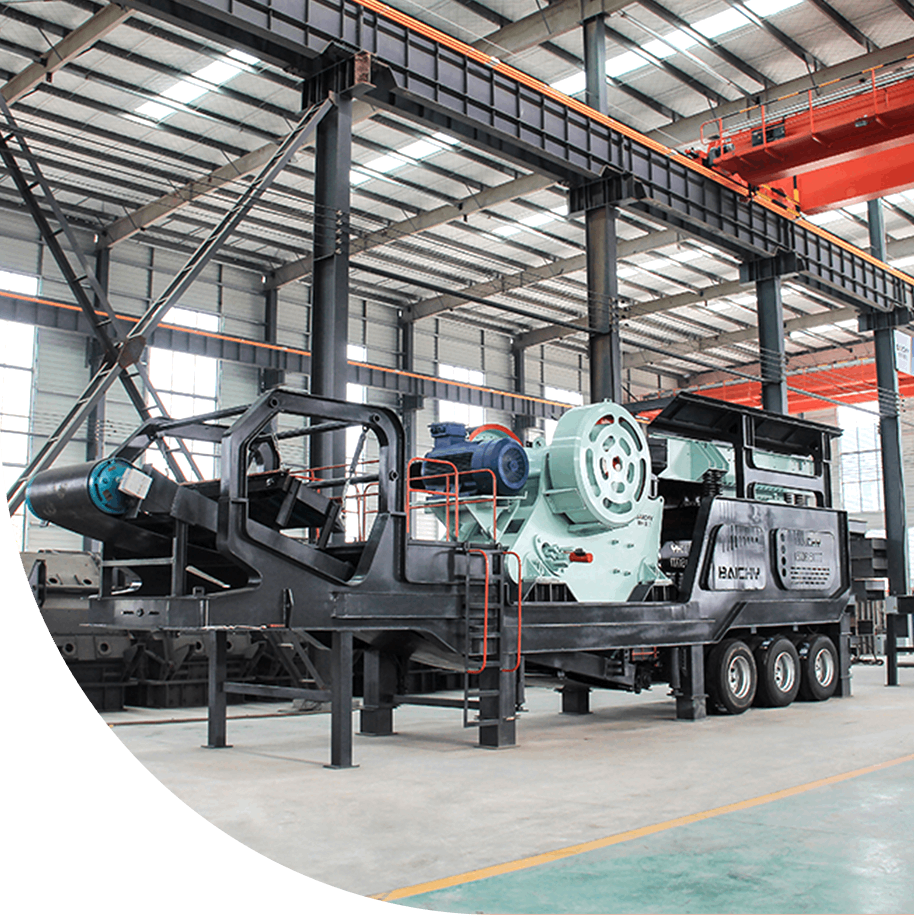
In today's era of booming infrastructure construction, the demand for sand and gravel aggregates remains strong. However, traditional fixed production lines, due to their limitations such as long construction cycles, fixed locations, and significant environmental pressures, are struggling to meet the fast-paced and ever-changing needs of many new projects. Today, we will delve into a classic case study of a successful 100 TPH mobile crushing plant, revealing how mobile crushing solutions became the key to our client's success.
I. Customer Pain Points: A Challenging Sand and Gravel Production Project
Our client undertook a two-year highway construction project. The project faced three core challenges:
Variable work sites: The crushing points needed to move multiple times along the tens of kilometers of the construction route, following the project progress.
Extremely tight schedule: The project had stringent requirements for the supply time of sand and gravel aggregates, disallowing lengthy plant construction and installation.
Strict environmental requirements: The project location had clear standards for dust and noise control, requiring green production.
Clearly, building a traditional fixed crushing production line was completely unfeasible in this scenario. The client urgently needed an efficient solution that could be "ready to use upon arrival and easily moved."
II. Solution: A Tailor-Made 100 TPH Mobile Crushing Production Line
Based on the client's needs, we recommended a wheeled mobile crushing and screening unit composed of a jaw crusher mobile station, a cone crusher mobile station, and a mobile screening station, with a core capacity of 100 tons per hour. This solution offered the following outstanding advantages:
Excellent mobility: Each unit has self-propelled capabilities and can be flexibly moved around the project site using a tractor, perfectly matching the pace of the project.
Rapid commissioning: After the equipment arrives on site, it requires almost no complex foundation construction; it can be quickly put into production after simple leveling, shortening the "plant construction" time from several months to a few days.
Powerful crushing performance: The core uses a high-performance jaw crusher for coarse crushing, combined with a multi-cylinder hydraulic cone crusher for medium and fine crushing, ensuring excellent output particle shape and reasonable gradation, fully meeting the material standards for highway construction.
Integrated environmental design: The entire machine adopts a fully enclosed design, with high-efficiency pulse dust removal systems at key dust points, and uses low-noise motors, ensuring that dust and noise emissions during operation are far below national standards.

Mobile Jaw Crusher

Mobile Cone Crusher

Mobile Screening Station
III. Successful Operation: Data Demonstrates Efficiency and Effectiveness
Since the commissioning of this 100 TPH mobile production line, remarkable operational results have been achieved:
Production Efficiency: The average actual output is consistently maintained at 105-110 TPH, exceeding design expectations and continuously supplying high-quality aggregates to the project.
Relocation Efficiency: During the project, three large-scale site transfers were completed. The total time for dismantling, transportation, and reassembly and recommissioning was controlled within 5 days each time, ensuring "zero material shortages" for the main project.
Operating Costs: Compared to purchasing ready-mix concrete aggregates, the customer's self-produced aggregate cost is reduced by approximately 35%. At the same time, fuel consumption and wear part wear rates are lower than the industry average, resulting in controllable maintenance costs.
Environmental Compliance: According to third-party testing, the dust concentration in the working area and the noise level at the equipment boundary fully meet environmental protection requirements, achieving a win-win situation for both economic and environmental benefits.
IV. Case Study Insights: Why are Mobile Crushing Plants Becoming a Trend?
This successful 100 TPH mobile crushing plant case is not only a victory for a single project, but also signifies a significant transformation in the sand and gravel aggregate production model:
Suitable for dispersed materials: Perfectly solves the crushing needs of dispersed material sources such as construction waste recycling, tailings treatment, and river dredging.
Enabling short-cycle projects: Provides a fast and economical crushing solution for early-stage mining operations, various small and medium-sized projects, and emergency relief projects.
Embracing green and intelligent technology: The new generation of mobile crushing plants is integrating functions such as remote monitoring, intelligent diagnostics, and energy consumption management, driving the industry towards a safer, cleaner, and more intelligent direction.
This case vividly demonstrates that a well-designed and properly matched 100 TPH mobile crushing plant is far more than just a simple combination of equipment; it's a "productivity unit" capable of deeply integrating into the client's business scenarios, addressing core pain points, and creating sustainable value. It represents the perfect blend of flexibility, cost-effectiveness, and sustainability, making it the ideal choice for investors and operators in the modern aggregate and resource recycling industries.
If you are also facing challenges related to site limitations, project timelines, or environmental regulations, please contact us to get your customized mobile crushing solution.
Q: What are the main advantages of a 100TPH mobile crushing plant over a fixed one?
A: The key advantages are exceptional mobility (easy relocation between sites), rapid setup and commissioning (no need for complex foundations), and the ability to process materials directly at the source, significantly reducing transportation costs. It's ideal for projects with multiple sites or limited duration.
Q: How quickly can a 100TPH mobile plant like this be relocated and set up at a new site?
A: Based on our success case, the entire process of disassembly, transportation, and re-commissioning for a complete plant can be completed within 3-5 days, ensuring minimal disruption to your project schedule.
Q: Is the finished material quality from a mobile plant suitable for high-standard projects like road construction?
A: Absolutely. Our 100TPH plant configuration utilizes a jaw crusher and a cone crusher, which produce well-graded, cubic-shaped aggregates that fully meet the strict standards required for road base and concrete aggregates.
Q: How does the plant address environmental concerns like dust and noise pollution?
A: The plant is designed with integrated dust suppression systems (like sprayers and enclosed conveyors) and optional dust collectors. Noise is minimized through enclosed engine bays and optimized component design, ensuring compliance with international environmental regulations.
Q: What kind of after-sales support and maintenance services do you provide for overseas customers?
A: We provide comprehensive global support, including remote online guidance, detailed operation & maintenance manuals, readily available wear parts supply, and the option for on-site technician dispatch. We also offer training for your local team to ensure smooth, long-term operation.