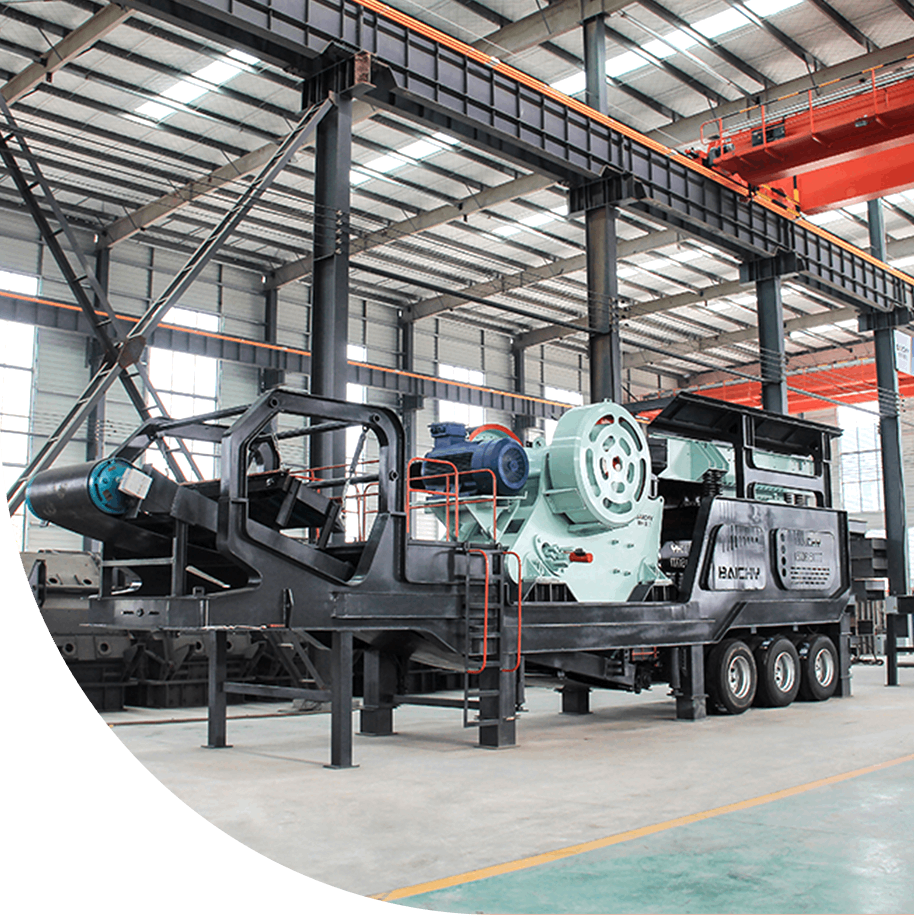
In the grand chain of the aluminum industry, from red ore to silver metal, bauxite crushing is the cornerstone and starting point of the entire process. The efficiency and cost of this step directly determine the economics and smoothness of subsequent alumina extraction. Bauxite, as a medium-hardness ore with complex composition and varying moisture and viscosity, cannot be simply "crushed"; it requires a process that demands precise design and equipment matching. This article will take you into the world of bauxite crushing, exploring how to "efficiently break through" your project by selecting the right "bauxite crusher."
I. Understanding the Challenges: The Unique Difficulties of Bauxite Crushing
The physical properties of bauxite determine the special characteristics of its crushing. First, its hardness range varies greatly, from soft soil to hard rock, requiring equipment with good adaptability and overload protection. Second, natural bauxite usually contains a certain amount of attached water and crystal water, especially during the rainy season or in certain mining areas, where high humidity and high viscosity can easily lead to blockage of the crushing chamber and poor discharge, seriously affecting continuous operation. Finally, the stringent requirements for the final product particle size (usually requiring crushing to ≤30mm or even finer) also test the crusher's crushing ratio and particle size control capabilities. Therefore, an ideal bauxite crusher must be a combination of strength, endurance, and "intelligence."
II. Core Equipment Analysis: Mainstream Bauxite Crusher Selection Guide
Faced with these challenges, the mainstream crushing equipment on the market each has its own strengths and weaknesses; the key is matching it to the ore characteristics and production needs.
Jaw Crusher (Coarse Crushing Pioneer): As a classic primary crushing equipment, its robust structure, large processing capacity, and large feed opening make it the first choice for crushing large pieces of raw ore (directly from the mine). Its powerful jaw force can easily handle hard bauxite blocks, laying the foundation for subsequent medium and fine crushing. When selecting, pay close attention to its heavy-duty design and the quality of its wear-resistant plates.

Hammer Crusher (Medium and Fine Crushing Expert): Utilizing the "impact crushing" principle, the hammer crusher performs exceptionally well when dealing with medium-hardness, sticky, and wet materials. Its large single-pass crushing ratio allows for one-time crushing of materials to the required particle size, simplifying the process. For sticky materials, a heavy-duty hammer crusher with grates or adjustable impact plates can be selected to effectively reduce clogging. Its relatively low investment cost makes it a popular choice for many small and medium-sized projects.

Impact Crusher (Particle Shape Shaper): If higher requirements are placed on product particle shape (cubic, tension-free cracks), the impact crusher is a better choice. It utilizes high-speed impact and hammer strikes to crush the ore along natural fissures, resulting in uniform particle size and high quality, which is beneficial for subsequent grinding and leaching. However, it is more sensitive to material moisture content, requiring control of feed moisture.

High-Efficiency Hydraulic Cone Crusher (Choice for Large Projects): For ultra-large-scale, high-hardness bauxite crushing production lines, the hydraulic cone crusher, based on the principle of layered crushing, can provide extremely high production efficiency and stable fine-grained products. It has a high degree of automation, allowing real-time adjustment of the discharge port, but the initial investment and maintenance technical requirements are also higher.

III. Optimization Strategies: Efficiency Improvement Beyond Equipment Itself
Choosing the right model is only the first step; system optimization maximizes value:
Feed Pre-treatment: Install heavy-duty screens to pre-separate oversized pieces and mud, protecting the crusher.
Anti-clogging Design: For sticky and wet materials, choose non-clogging rotors, heated bodies, or scraper devices.
Wear-resistant Parts Strategy: Using high-chromium alloy and tungsten-titanium alloy hammers and liners is key to reducing per-ton costs and extending operating time.
System Integration: Intelligently link the crusher with the feeder, conveyor belt, and dust removal system to achieve automated control and ensure stable and efficient operation throughout the entire line.
Bauxite crushing is not an isolated process; it is the first precision valve for efficient resource conversion. Investing in a technologically advanced bauxite crusher matched to the operating conditions means achieving lower overall operating costs, higher equipment uptime, and superior product quality, thereby enhancing the competitiveness of the entire aluminum industry chain at its source. Before making a decision, it is essential to conduct detailed material testing and comprehensive solution evaluation to ensure that every investment is transformed into tangible productivity.
Q: Which crusher is least prone to clogging when processing highly sticky bauxite?
A: Heavy-duty hammer crushers are usually the first choice. Their design allows the rotor to operate without grate bars (relying on adjustable impact plates to control particle size), greatly reducing the risk of material sticking and clogging. Ensure the equipment is equipped with additional scraping devices and easy access doors for cleaning and maintenance.
Q: What is the basic configuration flow of a bauxite crushing production line?
A: A typical flow is: Raw ore -> Vibrating feeder (removing mud and impurities) -> Jaw crusher (for coarse crushing) -> Belt conveyor -> Hammer crusher or impact crusher (for medium to fine crushing to the target particle size) -> Vibrating screen (screening qualified products) -> Qualified finished product warehousing. Pre-treatment before coarse crushing and closed-loop screening after fine crushing are crucial for efficiency.
Q: How to reduce the cost of wear-resistant parts during bauxite crushing?
A: The key is to use high-quality wear-resistant materials. We recommend using high-chromium alloy (Cr26, Cr27) cast hammers and liners, which offer a good balance of hardness and toughness. Simultaneously, optimizing the rotor speed and crushing chamber design enables "stone-on-stone" layered crushing, reducing direct metal wear. Establishing a regular wear monitoring and weld repair program can also effectively extend service life.
Q: What crushing scheme is recommended for a large-scale bauxite processing project with a capacity of 500 tons per hour?
A: For such a large-scale project, we recommend a two-stage crushing scheme of "jaw crusher + single-cylinder hydraulic cone crusher". The jaw crusher performs primary coarse crushing, while the hydraulic cone crusher performs secondary medium and fine crushing. This scheme offers high output, stable operation, good product particle size and shape, and is easy to automate, resulting in superior long-term economic efficiency.