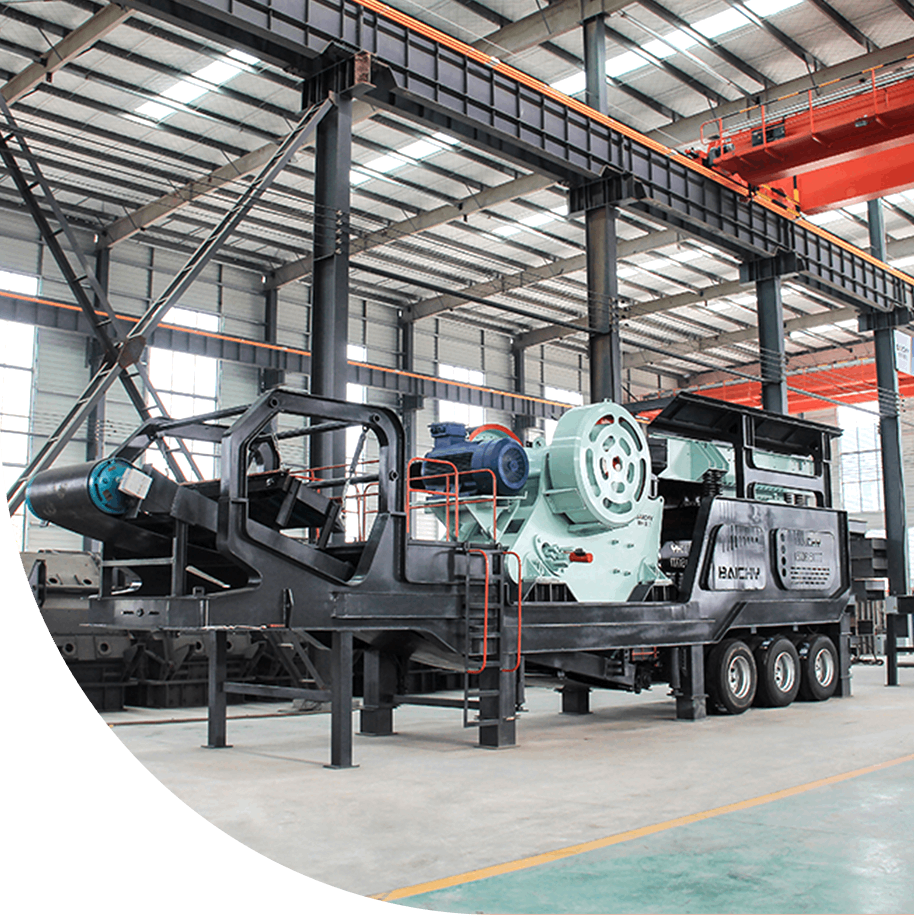
In today's world of continuously growing demand for mineral resources, efficient and intelligent mineral processing equipment has become a core driving force for the development of the mining industry. Whether it's metal ores, non-metallic minerals, or energy minerals, the raw ore extracted from the mine needs to undergo a series of precise processing steps to be transformed into high-purity concentrates with economic value. In this process, mineral processing equipment plays a crucial role, and its technological level directly affects resource recovery rate, energy consumption, and production efficiency. This article will systematically review the key processes and core equipment of mineral processing, providing comprehensive technical insights for industry professionals and those in related fields.
Crushing and Grinding: The "Vanguard" of Mineral Processing
The first step in mineral processing is to crush and grind large pieces of raw ore to a suitable particle size, creating conditions for subsequent separation. Crushing equipment typically includes
jaw crushers and
cone crushers for coarse and medium crushing; while grinding equipment is represented by
ball mills, semi-autogenous grinding mills (SAG mills), and vertical roller mills, responsible for fine grinding the ore to the particle size required for separation. High-efficiency and energy-saving crushing and grinding technologies, such as high-pressure grinding rolls (HPGR), are becoming increasingly popular, significantly reducing energy consumption and improving mineral liberation, making them an important part of green mining construction.
Separation and Concentration: The "Intelligent Core" of Technology
Separation is the soul of mineral processing, aiming to separate valuable minerals from gangue. Based on the differences in physical or chemical properties of minerals, various separation methods exist:
Gravity separation equipment: such as jigs, spiral chutes, and shaking tables, utilize differences in mineral density for separation, suitable for minerals such as gold, tin, and tungsten.
Magnetic separation equipment: including permanent magnet drum magnetic separators and high-gradient magnetic separators, used for separating magnetic minerals such as iron ore and ilmenite.
Flotation equipment: Flotation machines are key equipment for separating non-ferrous metals (copper, lead, zinc, etc.) and rare metals, using reagents to attach target minerals to bubbles for efficient separation. Dewatering and Concentration: The "Last Mile" of the Production Closed Loop
The concentrated ore and tailings after sorting usually contain a large amount of water, requiring dewatering treatment for transportation, storage, or water resource recovery. Thickeners (such as high-efficiency deep cone thickeners) achieve preliminary dewatering through gravity sedimentation; filtration equipment (such as plate and frame filter presses, belt filter presses, and ceramic filters) further reduces moisture content, producing dry-stacked tailings or filter cakes; drying equipment (such as rotary dryers) is used for concentrate products with extremely high moisture content requirements. Advanced dewatering technologies not only save water resources but also enhance the safety and environmental friendliness of tailings storage facilities.
Intelligentization and Future Trends
Currently, mineral processing equipment is rapidly developing towards large-scale, intelligent, and low-carbon solutions. The Internet of Things (IoT), artificial intelligence (AI), and big data technologies are integrated into equipment monitoring and process optimization, enabling predictive maintenance and automatic process control. Meanwhile, modular design, the application of wear-resistant materials, and innovations in high-efficiency and energy-saving technologies continuously drive cost reduction and efficiency improvement across the entire industry. Facing the challenges of increasing low-grade and co-associated ores, future equipment will focus more on sorting accuracy, comprehensive resource recovery, and near-zero emissions.
Technological advancements in mineral processing equipment are not only the engine for improving the economic efficiency of the mining industry but also the cornerstone for achieving sustainable resource utilization and a green transformation of the mining industry. For mining companies, scientifically selecting, optimizing the configuration, and intelligently maintaining these advanced equipment means possessing the dual key to efficiency and environmental protection in fierce market competition.
Q: How do I choose the most suitable primary crushing equipment for my mine?
A: The selection of primary crushing equipment (such as jaw crushers or gyratory crushers) mainly depends on the particle size, hardness, processing capacity, and feed characteristics of the raw ore. Generally, jaw crushers are preferred for high-hardness, large-lump ores; gyratory crushers are a better choice when a larger processing capacity and larger feed size are required. It is recommended to conduct ore grindability tests and conduct a comprehensive evaluation based on the production scale.
Q: What are the main differences and application scenarios of flotation machines and magnetic separators?
A: Flotation machines mainly utilize the differences in the physical and chemical properties of mineral surfaces, separating minerals through reagents and bubbles. They are widely used in the separation of non-ferrous metals such as copper, lead, zinc, molybdenum, and gold, as well as sulfide ores. Magnetic separators, on the other hand, utilize the differences in mineral magnetism for separation, mainly used for the purification of magnetic minerals such as iron ore, magnetite, and ilmenite, and for iron removal from non-metallic minerals.
Q: What are the different roles of thickeners and filter presses in the dewatering process?
A: Thickeners are mainly used for preliminary solid-liquid separation, concentrating low-concentration slurry into a higher-concentration underflow through gravity sedimentation, achieving large-flow processing and partial water resource recovery. Filter presses (such as plate and frame or chamber presses) are used for deep dewatering, applying pressure to the concentrated slurry to produce a filter cake with low moisture content, facilitating transportation or dry stacking, and are key equipment for achieving dry tailings disposal.
Q: What are the main aspects of intelligence in modern mineral processing plants?
A: Intelligence is mainly reflected in: online monitoring and predictive maintenance of equipment status to reduce unexpected downtime; optimizing process parameters such as grinding particle size, reagent addition amount, and flotation bubble size through AI algorithms to achieve automatic process control; using digital twin technology to simulate and optimize the entire production process; and achieving remote, efficient, and safe control of the entire plant through a centralized control center.
Q: What are the new trends in equipment selection when processing low-grade or complex co-associated ores?
A: The trends include: 1) Adopting high-efficiency and energy-saving crushing and grinding equipment such as high-pressure roller mills to improve the liberation degree of low-grade ores; 2) Applying combined separation processes, such as a "flotation-magnetic separation-gravity separation" combined flow, and using equipment such as high-efficiency flotation columns and centrifuges to improve separation accuracy; 3) Integrating sensor-based intelligent sorting equipment (such as XRT and laser sorters) for pre-concentration and waste rejection, significantly reducing the amount of material fed into the grinding process and lowering processing costs; 4) Using modular and mobile processing equipment to flexibly adapt to different mining sites.