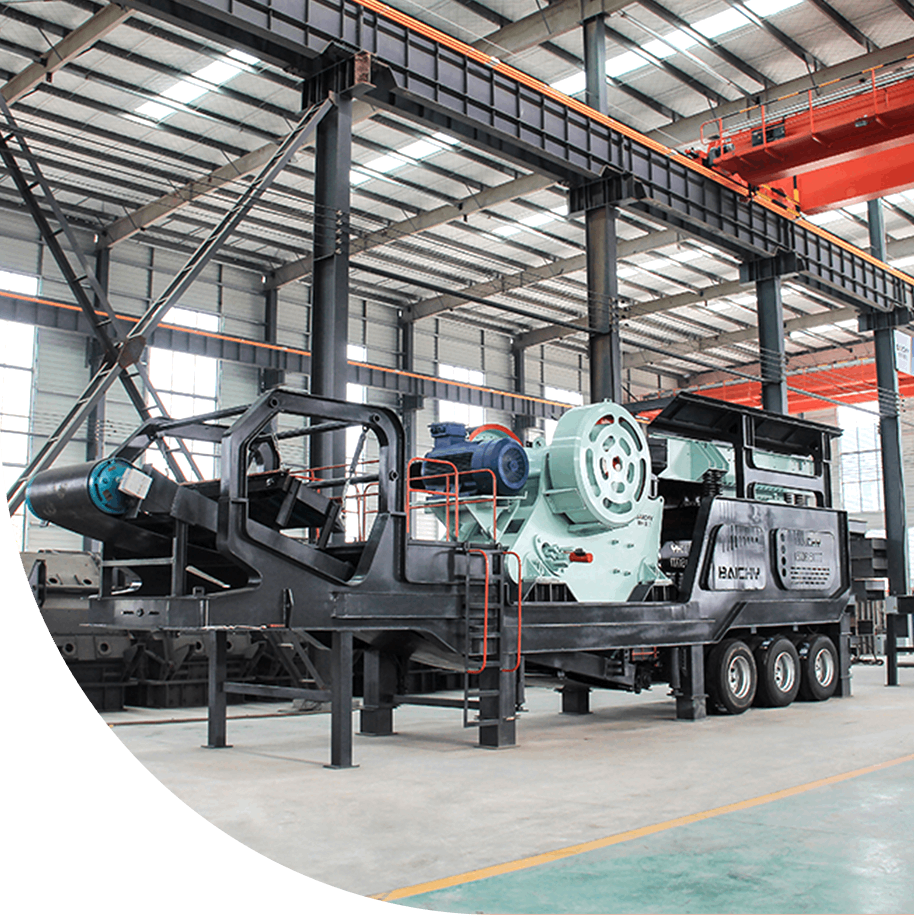
In mining, aggregate production, construction waste recycling, and even infrastructure construction, crushers are core production equipment. A suitable crusher is the cornerstone of efficient and stable production, while a hasty or incorrect purchasing decision can lead to insufficient capacity, soaring operating costs, frequent breakdowns, and even the shutdown of the entire production line, resulting in huge economic losses.
Therefore, a comprehensive and systematic evaluation before signing a contract and paying for the equipment is crucial. This article will outline seven key factors that must be considered in depth before purchasing a crusher, helping you make wise and long-term technical and business decisions.
I. Clearly Define the Core Characteristics of the Crushed Material
This is the starting point for all decisions. Different materials have vastly different requirements for equipment.
Hardness and Abrasion Resistance: Is the material limestone, granite, pebbles, or construction waste? What is its Mohs hardness? High-hardness materials (such as granite) require equipment with stronger impact resistance and wear resistance (such as cone crushers), while medium-to-low hardness materials (such as limestone) can use jaw crushers, impact crushers, or hammer crushers, which are less expensive.
Particle Size and Input/Output Requirements: What is the maximum particle size of the raw material? What is the desired final product particle size? Is only one stage of crushing needed, or are multiple stages of crushing required to produce aggregates of various specifications? This directly determines the crusher model and the design of the crushing process (coarse crushing, medium crushing, fine crushing).
Moisture and Clay Content: Excessive moisture or high clay content in the material can easily cause blockages in the crushing chamber and screening process. For such materials, it may be necessary to consider equipment with special designs (such as no screen plates, or heating capabilities), or to consider washing and screening processes beforehand.
II. Accurately Assess Production Capacity Requirements
Capacity is a critical indicator for equipment selection and must be based on current and future plans.
Current and Expected Output: It is necessary not only to meet current production needs but also to consider the capacity expansion space brought about by business growth in the next 1-3 years. Choosing equipment with slightly more capacity is far more economical than replacing equipment or adding new production lines in the short term due to insufficient capacity.
Work System: Does the equipment operate for 8 hours, 16 hours, or 24 hours continuously per day? Different work intensities have completely different requirements for equipment durability, reliability, and maintenance plans.
III. Choosing the Right Type of Crushing Equipment
Different types of crushers have different principles and are suitable for different scenarios.
Jaw Crusher: As the preferred choice for primary crushing, it has a simple structure, reliable operation, and strong adaptability. It is good at processing materials of various hardnesses, but the product particle shape is relatively poor.

Cone Crusher: Suitable for secondary and fine crushing, especially good at processing high-hardness materials. It has high production efficiency, long wear part life, and stable operation, but the investment and maintenance costs are higher.

Impact Crusher: Uses impact energy for crushing, resulting in excellent product particle shape. It is suitable for medium and fine crushing of materials with medium hardness or below, and is an ideal choice for producing high-standard concrete aggregates, but wear is faster for high-hardness or highly abrasive materials.

Hammer Crusher/Impact Crusher: Suitable for one-stage crushing of medium-soft materials, with high efficiency, but the hammer heads wear quickly and require frequent replacement.

Key Recommendation: Based on material characteristics, product requirements, and budget, choose a single piece of equipment or combine them into a complete multi-stage crushing and screening production line such as "jaw crusher + cone crusher" or "jaw crusher + impact crusher".
IV. Comprehensive Calculation of Total Cost, Not Just Focusing on Purchase Price
"The cheapest equipment is the most expensive"—this is an industry axiom.
Initial Investment: Includes the price of the equipment itself, freight, installation and commissioning costs, and infrastructure construction costs.
Operating Costs: This is the major part of long-term costs. Focus on energy consumption (electricity consumption; the electricity consumption of equipment with different principles varies significantly), wear part consumption (such as the material, lifespan, replacement frequency, and ease of replacement of jaw plates, hammerheads, and liner plates), and daily maintenance labor costs.
Output Benefits: Combine costs with production capacity, product qualification rate, and sales price to calculate the cost per ton and return on investment. A piece of equipment with high efficiency and a high yield rate, even if the unit price is slightly higher, can pay for itself faster.
V. Thoroughly Investigate the Manufacturer's Strength and Qualifications
Behind the equipment is the manufacturer's comprehensive capabilities.
Technical R&D Capabilities: Do they have a mature R&D team and patented technology? Is the equipment design reasonable and advanced?
Production Process and Quality System: Workshop scale, processing equipment (such as large boring and milling machines), assembly processes, and quality management certifications (such as ISO9001) are crucial hardware guarantees.
Industry Reputation and Case Studies: Check their collaborating clients, especially successful cases similar to your working conditions, and conduct on-site inspections whenever possible to hear genuine feedback from existing users.
VI. Review After-Sales Service and Technical Support System
"Equipment without after-sales service is just a pile of scrap metal." This is especially crucial for customers located overseas.
Service Network: Does the manufacturer have offices, service centers, or reliable agents in your country or region? Can they provide timely on-site support?
Spare Parts Supply: What is the inventory situation of common wear parts and core components (such as spindles and bearings)? What is the delivery time? Are the prices transparent and reasonable?
Technical Training: Do they provide systematic installation, operation, and maintenance training (on-site or remote)? Are the technical documents (drawings, manuals) complete and clear?
VII. Strictly Adhere to Environmental Protection and Safety Regulations
Environmental requirements are becoming increasingly stringent worldwide.
Dust and Noise Control: Is the equipment equipped with or does it have provisions for dust collection (such as pulse dust collectors) and noise reduction devices? Can it meet the environmental emission standards of the project location?
Equipment Safety Design: Does it have the necessary safety protection devices and emergency stop systems? Does the design comply with international safety standards?
Q1: What is the most important factor to consider when choosing between a jaw crusher and a cone crusher?
A: The primary factors are the hardness/abrasiveness of the material and the required product shape/size. Jaw crushers are ideal for primary crushing of hard to moderately hard materials. Cone crushers are better for secondary crushing of very hard and abrasive materials (like granite/basalt) and produce a more uniform, cubical end product with less wear.
Q2: How can I accurately estimate the total cost of ownership (TCO) for a stone crusher?
A: Look beyond the initial price. Calculate TCO by adding: Initial Purchase + Installation + Estimated Energy Consumption (biggest ongoing cost) + Wear Parts Replacement Cost (frequency & price) + Routine Maintenance Labor + Potential Downtime Costs. Request wear part consumption rates (grams/ton) from the manufacturer for your specific material.
Q3: Why is on-site testing with our own material highly recommended before purchase?
A: Testing provides real-world data on actual capacity, final product gradation, wear rate, and power consumption for YOUR stone. It reveals how the machine truly performs with your specific material's size, hardness, and moisture, eliminating guesswork and ensuring the selected model meets your expectations.
Q4: As an international buyer, what should I check regarding after-sales service?
A: Key checks include: 1) Local/Regional Service Presence: Do they have agents or engineers nearby? 2) Spare Parts Logistics: Where is the parts warehouse? What are the standard shipping times? 3) Technical Support: Availability of remote online assistance and detailed English manuals/drawings. 4) Training: Provision for on-site or video training for your operators.
Q5: What are the key environmental specifications I need to discuss with the supplier?
A: Focus on dust and noise control. Ask about integrated dust suppression systems (like water sprays) or compatibility with bag filter houses. Inquire about the machine's guaranteed sound power level (dB(A)) to ensure it complies with your local regulations. Also, discuss options for containing spillage and managing water runoff if wet processing is involved.