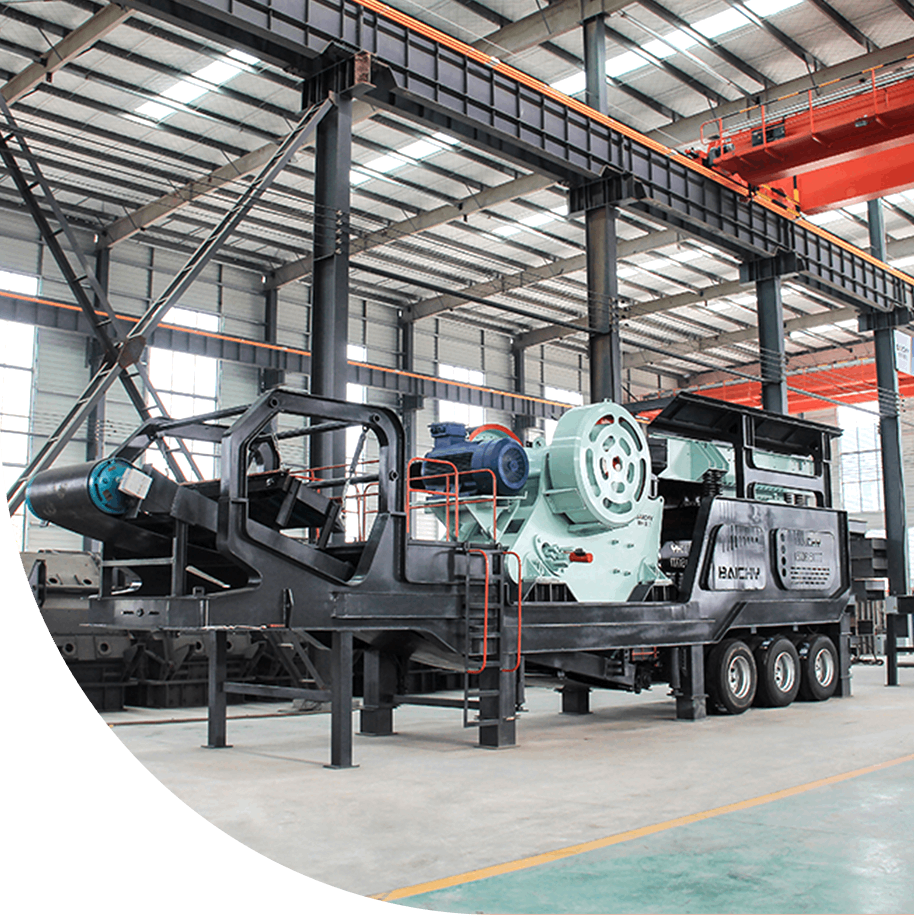
Both simple PC hammer crushers and simple jaw crushers are essential pieces of equipment for material crushing in industries such as mining, construction, and recycling. However, they operate on different principles: the jaw crusher crushes materials through compression, while the hammer crusher uses high-speed rotating hammers to break materials. Understanding the differences between these crushers can help determine the best fit for your specific crushing needs.
I. How Simple PC Hammer Crushers Work
The simple PC hammer crusher operates by using a rotating hammer to impact and break the material. Material is fed into the crusher’s chamber, where it is struck by the rotating hammers at high speed. This high-speed impact shatters the material into smaller pieces. The size of the output material depends on the size of the openings in the screen and the speed of rotation. This type of crusher is ideal for processing brittle materials like limestone, coal, and other soft to medium-hard materials.

II. How Simple Jaw Crushers Work
In contrast, simple jaw crushers work by compressing the material between two jaws: a stationary jaw and a moving jaw. As the material enters the crushing chamber, the moving jaw moves back and forth, squeezing the material against the stationary jaw, which fractures the material into smaller pieces. This design makes jaw crushers highly effective for crushing tougher, harder materials like ores, rocks, and construction debris.
III. Benefits of Simple PC Hammer Crushers
Simple PC hammer crushers offer high crushing efficiency, particularly for brittle and soft materials such as limestone, coal, and gypsum. With fewer moving parts and a simple design, they require less maintenance, making them a cost-effective option. They are ideal for applications where uniform particle size is essential, as they produce a more consistent output, contributing to smoother processing in various industries.

IV. Benefits of Simple Jaw Crushers
Simple jaw crushers are highly durable and built to handle tougher, more abrasive materials like ores, rocks, and construction debris. Known for their high throughput, jaw crushers can process large quantities of material efficiently, making them suitable for demanding industrial applications. They also have a longer lifespan and are cost-effective for long-term operations, especially when dealing with hard and dense materials.
When deciding between a simple PC hammer crusher and a simple jaw crusher, consider the type of material you are processing. For softer, more brittle materials like limestone or coal, a hammer crusher may be the better option due to its high crushing efficiency and ability to create uniform particle sizes. However, for tougher, more abrasive materials like rocks and ores, a jaw crusher will provide better durability and efficiency. Assess your operational needs, material hardness, and desired output size to choose the appropriate crusher.
Q: What is the main difference between a PC hammer crusher and a jaw crusher?
A: The primary difference lies in the way they crush material. Hammer crushers use high-speed rotating hammers to impact and break materials, while jaw crushers use compression, crushing materials between a stationary and a moving jaw.
Q: Can a hammer crusher be used for hard materials?
A: PC hammer crushers are better suited for brittle and softer materials. For harder materials like ores and rocks, a jaw crusher is generally more efficient and durable.
Q: Which crusher is more energy-efficient?
A: Jaw crushers tend to be more energy-efficient when processing harder, denser materials, while hammer crushers are efficient for softer materials, but they can consume more energy for harder materials.