Mobile Jaw Crusher: Crawler or Wheeled — Which One Pays?
The jaw inside a crawler machine and the jaw inside a wheeled machine are the same jaw. What differs is the chassis — and the chassis decides who pays for every move, how the vibration leaves the frame, and whether the plant needs a power line. Choosing between them is not a question about mobility in general; it is a question about how often the machine moves and how far.
This article sets out where each undercarriage actually earns its cost, and the four site facts that settle the choice before any model number is discussed.
I. The Difference Is in the Move, Not the Machine
• A crawler machine moves itself inside the site. It walks on its own tracks for hundreds of metres between faces, without a tractor and without lowering a jack. That is what the tracks are for.
• Between sites, the crawler still needs a low-bed. Road travel is not what tracks do; a track-mounted plant is loaded, chained and permitted like any other oversized load.
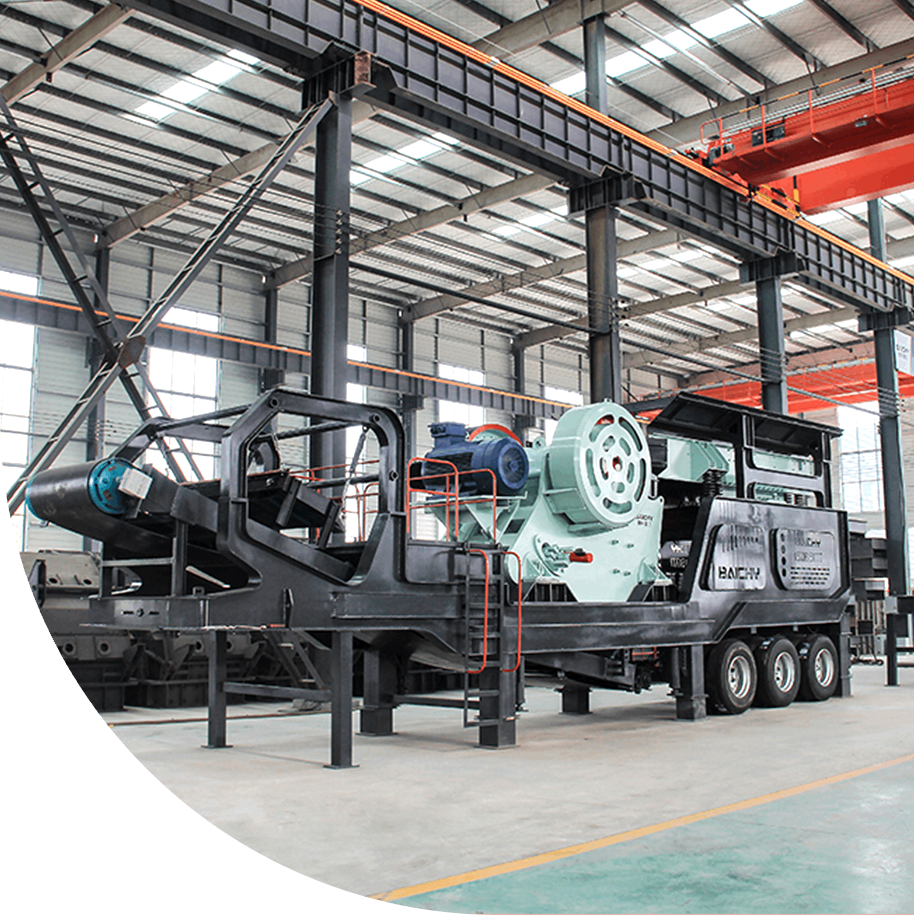
• A wheeled machine is towed. It needs a tractor unit, a legal towing configuration and a route that accepts its width — but the transfer between two sites is a routine haul rather than a project.
• So the two machines are not fast and slow versions of each other. One is optimised for short moves inside a site; the other for longer moves between sites.

II. How Each Chassis Handles the Jaw's Vibration
A jaw crusher loads its frame in a direction that reverses with every stroke. How that load reaches the ground is the part buyers rarely ask about, and it is where the two designs differ most in service.
• Tracks spread the load. The whole length of both track chains sits on the ground, so the pressure per square metre is low and the vibration is distributed over a large area. Soft or uneven ground is tolerated far better.
• Wheels work on jacks. A wheeled plant must be levelled and set down on its outriggers before it crushes. The load then passes through a small number of pads, so the ground beneath them has to carry far more per square metre.
• Set down badly, a wheeled plant twists. If the outriggers are not level the frame is loaded diagonally, and the symptom appears later as cracked welds or a misaligned discharge belt, not as an obvious fault.
• The practical consequence: a wheeled plant needs a prepared, level, load-bearing surface; a crawler plant can work on ground that a wheeled one would refuse.

Track shoe width is a transport decision as well as a ground decision. Wider shoes spread the load and let the plant work on softer ground, but they add to the transport width — so the machine that is gentlest on a wet bench is the one that needs the widest permit on the road. The specification has to satisfy both ends of that trade.
III. Four Facts That Settle the Choice
| Question | Crawler wins when | Wheeled wins when |
| How often does it move? | Weekly or daily, but only within the site | Between sites, a few times a year |
| How far is one move? | Hundreds of metres along a face | Tens of kilometres on public road |
| What is the ground like? | Soft, uneven, or freshly blasted rock | Compacted, level, prepared |
| Where does power come from? | Onboard diesel and hydraulics, no supply needed | Site power available, or a generator is acceptable |
Note the third row. It is the one that catches buyers out: the machine with wheels is the one that needs the better ground at the moment of crushing, because it stands on four points instead of two long tracks.
IV. The Jaw Itself Does Not Change
Whichever chassis is chosen, the primary decision stays the same and it is made from the feed, not from the undercarriage: the feed opening has to accept the largest lump you will actually deliver, with margin, and the closed-side setting has to hand the next stage something it can take. A mobile machine makes those two numbers harder to fix later, because the whole unit is bought as one package.
The one difference the chassis forces is feed height. A wheeled unit sits over its tyres, so the hopper is higher and the loader has to lift further; a crawler unit can be built with a lower feed arrangement. On a site where the loading tool is at the limit of its reach, that centimetre difference decides the cycle time.
V. Three Things Missed in the Layout
• Turning room. A crawler plant needs space to swing and to reverse; a wheeled one needs a swept path for the tractor and the trailer. Both are lost to stockpiles if nobody plans for them.
• Cable or fuel. An electric wheeled plant needs a route for the supply and protection for the cable; a diesel crawler plant needs fuel access and exhaust clearance. This is an operating cost decision disguised as a specification detail.
• Discharge geometry. The conveyor that leaves the jaw sets how close the plant can work to the stockpile. A machine that has to be repositioned every few hours has lost the mobility it was bought for.
• Permits. Both types are oversized loads on a road; what changes is how often you need the permit and how long the move takes with each.
VI. What to Ask the Supplier For
• Transport weight and dimensions for the exact configuration quoted, and whether conveyors fold without removal.
• Ground pressure — track pressure for a crawler, outrigger pad load for a wheeled unit — with the surface each figure assumes.
• Feed opening height and the loader reach it implies, measured on the drawing rather than assumed.
• The power arrangement: onboard diesel, electric motor, or both, with the installed power and the fuel or supply requirement.
• Relocation time with your own crew, described as a sequence, not as a number.
• Levelling and jacking procedure for a wheeled unit, including the pad size and the tolerance on level.
VII. A Decision Path in Four Questions
• How many times a year does the machine change site? Fewer than a handful, and the transport method rarely decides the purchase.
• How far does it travel inside the site, and on what ground? Long faces and soft benches point to tracks; a fixed pad points to wheels.
• Is there power where it will stand? If not, the choice is effectively made — an onboard diesel crawler needs nothing from the site.
• Who moves it, and with what? If your crew has no tractor and no low-bed, one of the two answers is a phone call you will be making every month.
Frequently Asked Questions About Mobile Jaw Crushers
Q: Is a crawler machine more productive than a wheeled one?
A: Not in crushing terms — the jaw does the same work. The difference is availability: a crawler plant can follow a moving face without being re-rigged, which is productivity on a site that moves and irrelevant on one that does not.
Q: Can a wheeled plant be moved without a low-bed?
A: It is towed, not carried — but it still needs a suitable tractor, a legal route and a permit for its width and weight. The gain over a crawler is time and handling, not the absence of paperwork.
Q: Why does my wheeled unit shake more than expected?
A: Usually the outriggers. A wheeled jaw relies on four levelled pads to take a reversing load; if one is soft or the frame is not level, the machine rocks and the welds pay for it.
Q: Which type suits contract crushing?
A: Both are used, but the deciding question is the ratio between site moves and in-site moves. Frequent site changes favour towing capacity; long faces and short moves favour tracks.
Q: Do I still need a foundation?
A: Neither type needs concrete. Both need a surface that can carry them — a crawler over a large area, a wheeled unit over a much smaller one, which usually means prepared ground or steel plates.
For crawler and wheeled jaw configurations, see the mobile crushing plant range.