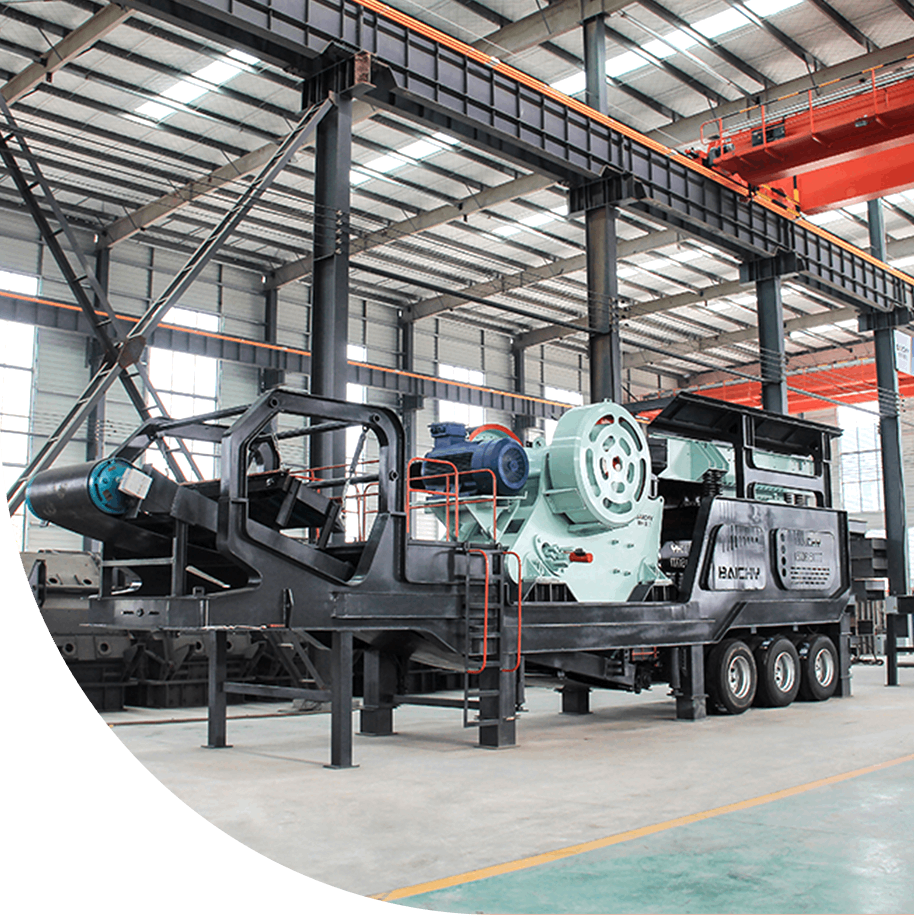
Ball mills are widely used in ore dressing and mineral processing to grind ores into finer particles, which is essential for separating valuable minerals from waste material. The grinding process takes place in a rotating cylindrical drum, where the ore is combined with grinding media such as steel balls. As the drum rotates, the grinding media crushes the ore, breaking it into smaller particles. This not only reduces the size of the ore but also helps to expose valuable minerals, making them easier to separate in subsequent stages.
I. Continuous and Uniform Grinding
The grinding process in a ball mill is continuous and highly efficient, ensuring uniform particle size and optimizing the separation of minerals. Ball mills are adaptable to different types of ore, allowing for customization of the grinding process to meet the specific needs of each mineral. The continuous grinding action, combined with the ability to adjust speed and media size, makes ball mills suitable for a variety of minerals and ore types, providing flexibility for different ore dressing operations.

II. Energy Efficiency and Cost-Effectiveness
Ball mills are energy-efficient, making them a cost-effective option for mineral processing plants. They consume less power compared to other grinding equipment while maintaining high throughput, which is crucial in large-scale mining operations. By reducing energy consumption, ball mills help lower the overall operational costs, contributing to the profitability of mineral processing plants.
III. Versatility and Customization
The versatility of ball mills extends to their various configurations, including different sizes, materials, and designs, which can be customized for specific processing requirements. Whether dealing with hard or soft ores, a ball mill can be adapted to meet the demands of different grinding applications. The ability to use different grinding media, such as ceramic, steel, or rubber balls, further enhances their adaptability to a range of mineral types.

IV. Optimizing Mineral Separation
In addition to grinding, ball mills help improve the overall efficiency of mineral processing by allowing for better control of particle size distribution, which is key to optimizing the separation process. By fine-tuning the grinding action, ball mills contribute to improved recovery rates and the production of higher-quality concentrates, which can be further processed or sold.
Moreover, ball mills require relatively low maintenance and are designed for long-term operation with minimal downtime. Regular inspections and maintenance of components such as the grinding media, liners, and motors ensure smooth operation and extend the life of the equipment. This reliability makes ball mills a long-lasting and valuable asset in the mining and mineral processing industries.
Q: What types of ores can be processed using a ball mill?
A: Ball mills are suitable for grinding a wide variety of ores, including gold, copper, iron, coal, and limestone. They can be customized to handle different ore types, ensuring efficient grinding and mineral separation.
Q: How does a ball mill improve mineral processing efficiency?
A: Ball mills improve mineral processing efficiency by providing continuous and uniform grinding, which ensures consistent particle size. This helps optimize subsequent separation processes and enhances recovery rates.
Q: Are ball mills energy-efficient?
A: Yes, ball mills are energy-efficient, as they consume less power compared to other grinding equipment. Their energy-saving design makes them a cost-effective option for large-scale mineral processing operations.