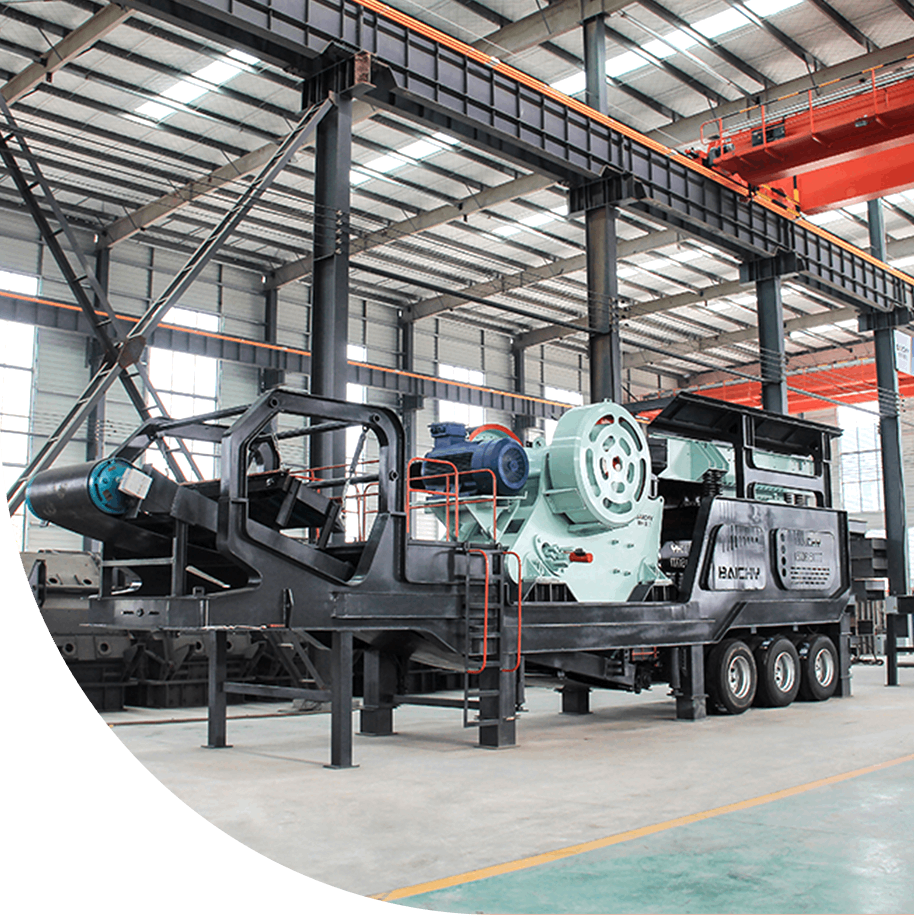
Basalt is a hard and abrasive material that places significant demands on crushing equipment. For a 50–70 t/h basalt processing project in Rwanda, a two-stage compression crushing configuration using a PE-600×900 Jaw Crusher for primary crushing and a CS75 Cone Crusher for secondary crushing provides a practical equipment combination. The jaw crusher handles run-of-quarry basalt in the initial stage, while the cone crusher further reduces the material to controlled aggregate sizes.
The PE-600×900 Jaw Crusher serves as the primary crushing equipment in the proposed line. With a 600×900 mm feed opening, it is designed to receive large quarry material and reduce it to a size suitable for the secondary crushing stage. Its relatively simple mechanical structure also supports routine inspection and maintenance, which can be important for aggregate projects operating in regions where maintenance resources and spare-parts logistics must be carefully planned.
I. CS75 Cone Crusher Performs Secondary Size Reduction
After primary crushing, the material enters the CS75 Cone Crusher for secondary processing. As a spring-type cone crusher, the CS75 uses compression crushing to further reduce hard rock and produce more controlled aggregate sizes. For a 50–70 t/h basalt line, matching the cone crusher setting with the required feed gradation and final product specifications is essential for maintaining stable production and controlling wear consumption.
II. Closed-Circuit Screening Improves Product Size Control
A vibrating screen and return conveyor can form a closed circuit with the CS75 cone crusher. In this configuration, the material discharged from the cone is screened into different size fractions, while oversized material is returned to the cone for additional crushing. Typical commercial fractions may include 0–5 mm, 5–10 mm and 10–20 mm, with additional sizes configured according to the requirements of the local aggregate market and applicable construction standards.
| Parameter |
Specification / Description |
| Project Type |
Basalt Crushing Line |
| Processing Material |
Basalt / Volcanic Rock |
| Designed Capacity |
50–70 t/h |
| Optional Road Base Fraction |
20–31.5 mm |
| Feeding Equipment |
ZSW Series Vibrating Feeder, optional |
| Main Application |
Aggregate production, road construction and concrete applications |
| Key Considerations |
Wear-part consumption, product sizing, screen capacity and service support |
III. Compact Production Capacity Matches Regional Aggregate Demand
A 50–70 t/h production range provides a practical scale for smaller quarry and aggregate projects that do not require the investment of a much larger crushing plant. The equipment can be arranged with a vibrating feeder, jaw crusher, cone crusher, vibrating screen and belt conveyors according to the site layout. Proper equipment matching helps balance capital investment, production requirements, maintenance needs and transportation considerations.
IV. Wear Parts and Service Planning Affect Long-Term Operating Costs
For abrasive basalt applications, equipment selection should be evaluated beyond the initial purchase price. Jaw plates and cone liners are important operating consumables, so buyers should confirm wear-part availability, replacement lead times and expected service requirements before commissioning. Operator training, installation support and references from comparable
hard-rock projects can also help improve long-term plant reliability and maintenance planning.
Frequently Asked Questions About the Rwanda basalt crushing line
Q: Why is a jaw crusher and cone crusher combination suitable for basalt?
A: Both machines use compression crushing, making the configuration suitable for hard and abrasive basalt while providing staged size reduction.
Q: What is the capacity of this Rwanda basalt crushing line?
A: The designed production range is 50–70 t/h. Actual output depends on feed gradation, material characteristics, crusher settings and screening conditions.
Q: Does the basalt crushing plant need a vibrating screen?
A: A vibrating screen is recommended when multiple finished aggregate fractions and controlled product sizes are required.
Enhance Your Material Handling Efficiency Today – Contact Our Experts for Customized solutions.