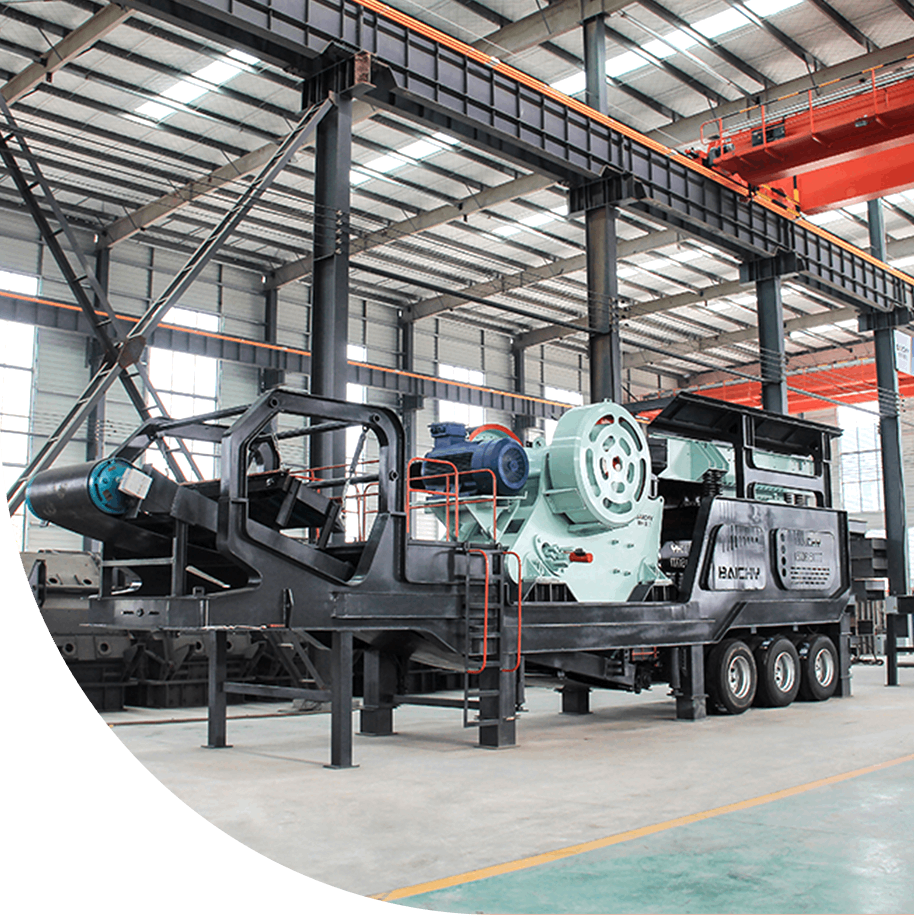
The Guatemala mining site features a fully integrated crushing and screening production line, designed to process high volumes of aggregates efficiently. The system combines a jaw crusher for primary crushing, a hammer crusher for secondary crushing, and a linear vibrating screen for material separation. This configuration allows for continuous and automated material flow, minimizing manual handling and ensuring consistent output. The production line is capable of handling varying ore hardness, from limestone and gravel to medium-hard rocks, making it highly adaptable for different mining projects. In addition, site engineers have optimized the workflow to maximize throughput while reducing energy consumption and operational downtime.
I. Jaw Crusher for Primary Crushing
The jaw crusher serves as the backbone of the production line, providing primary crushing of large rocks and ores. Its heavy-duty design allows it to withstand abrasive materials while maintaining high throughput. At the Guatemala site, the jaw crusher reduces rocks up to 800 mm in size into smaller, manageable pieces for the hammer crusher downstream. Features like adjustable discharge settings and hydraulic safety devices ensure precise control and safe operation, while robust jaw plates provide long service life, reducing maintenance frequency and costs. The primary crusher ensures that materials are efficiently prepared for subsequent processing stages.
II. Hammer Crusher for Secondary Crushing
After the primary jaw crusher, materials are fed into the hammer crusher, which performs secondary crushing to further reduce particle size. The hammer crusher at the Guatemala site is equipped with high-speed rotors and durable hammers, capable of handling medium-hard ores and producing uniform, cubical particles ideal for the vibrating screen. The design allows for a high reduction ratio while minimizing fines generation and energy consumption. Operators can adjust rotor speed and gap settings to match material characteristics, optimizing output quality and enhancing overall production efficiency. The hammer crusher’s impact-based crushing mechanism ensures minimal wear and consistent performance even under heavy load conditions.
III. Linear Vibrating Screen for Material Separation
The linear vibrating screen is the final stage of the production line, responsible for separating materials by size and preparing them for final use or further processing. At the Guatemala site, the screen has multiple decks with adjustable angles and mesh sizes to achieve precise grading. Its high-frequency vibration ensures that materials move smoothly across the surface, reducing the risk of clogging and ensuring uniform separation. The screen can handle varying feed volumes and types, from fine sand to medium-sized aggregates. By integrating this equipment, the production line maintains high throughput and quality control, while operators benefit from simplified maintenance and easy access to screen decks for inspection or replacement.
IV. Efficiency and Workflow Optimization
Combining the
jaw crusher, hammer crusher, and linear vibrating screen into a single production line significantly improves operational efficiency. Material flows seamlessly from primary crushing to secondary crushing and finally to screening, eliminating bottlenecks and reducing manual handling. At the Guatemala site, this integrated workflow enables the line to achieve up to 150–200 tons per hour of processed material, depending on ore type and feed size. Automated conveyors and optimized belt alignments minimize energy consumption and labor requirements. Engineers have also implemented real-time monitoring of crusher load, vibration, and feed rate to ensure continuous, safe, and efficient operation.
The integrated production line at the Guatemala site offers multiple advantages for mining operations. It provides high output with consistent particle size, reduces downtime with easy maintenance of all components, and ensures operational safety with hydraulic and automated control features. The modular design allows operators to adapt the configuration according to different material properties, production targets, or site conditions. Additionally, the line supports environmentally friendly operation by reducing dust emission through enclosed conveyors and water spray systems. Overall, this production line demonstrates how combining jaw crushers, hammer crushers, and linear vibrating screens can deliver reliable performance, cost-effectiveness, and maximum profitability for mining projects.
Frequently Asked Questions About Jaw Crusher, Hammer Crusher, and Linear Vibrating Screen Production Line
Q: What is the function of the linear vibrating screen?
A: The linear vibrating screen separates crushed materials by size, ensuring uniform grading and optimal downstream processing.
Q: How does the hammer crusher improve material processing?
A: The hammer crusher provides secondary crushing, producing finer, uniform particles suitable for screening.
Q: What is the role of the jaw crusher in the production line?
A: The jaw crusher performs primary crushing, reducing large rocks into manageable sizes for downstream processing.
Enhance Your Material Handling Efficiency Today – Contact Our Experts for Customized solutions.