Construction Waste Recycling: The Plant Is Decided at the Gate
Most proposals for a construction and demolition waste line are drawn as a crushing plant with rubbish going into it. That framing is why so many of them produce an aggregate nobody will buy. A C&D recycling line is a separation plant that happens to end in a crusher: what you take out before the chamber decides the product, and the tipping gate decides what you can take out.
This article covers the three streams that must never be mixed, why the pre-sort area is the most important piece of civils on the site, which contaminants make recycled aggregate unsaleable, and how the local acceptance specification — not the tonnage — should set your flowsheet.
I. Three Streams, Three Fates
Demolition rubble is not one material. It arrives as a mixture of at least three things with completely different values, and the plant's first job is to stop them travelling together.
• The soil and fines fraction. Excavation spoil, sweeping dust, mortar and plaster crumble. This is the largest fraction by mass in most demolition arisings, and it has almost no aggregate value. If it goes through the crusher it becomes dust that coats the product and inflates the tonnage you handle for nothing.
• The metals. Rebar, mesh, conduit, sheet. Small pieces ride through and damage belts and liners; long bars bridge in hoppers and stop the feed. Recovered metal has a market of its own, so removing it early is revenue, not cost.
• The mineral fraction. Concrete, brick, block, stone, tile. This is the product. Its quality depends almost entirely on how much of the first two streams was still in it when it reached the chamber.
• So the flowsheet order is separation, then reduction. Every separation step placed after the crusher works on material that has already been mixed and partly crushed together, which is why the fines content of a badly ordered plant is high and its product grade is low.

II. The Gate Is the Real Design Decision
The tipping area is usually treated as a traffic problem and budgeted last. It is in fact the plant's first process stage, and it sets the ceiling on everything downstream.
• You need floor area to refuse a load. A plant that cannot reject a contaminated load — soil with household waste, or a skip full of plasterboard — has to accept it into the process. Refusing costs a conversation; accepting costs a batch of product.
• Reception has to be separated by material type. Clean concrete rubble and mixed renovation waste do not belong in the same stockpile, because they cannot be blended back into specification once mixed.
• Feeding has to be controlled, not tipped. A loader pushing rubble at a hopper gives the plant surges that no screen can absorb. The feed rate should be set by a feeder, which is why a grizzly or apron arrangement at the front is a process decision, not a convenience.
• Water and dust belong at the gate, too. Demolition rubble is dusty when dry and sticky when wet. Neither condition is handled by adding a spray bar at the crusher; both are decided by how the material is stored and moved before it is fed.
• And the pre-sort should be on the floor, not only on a belt. Hand-picking or machine sorting before the crusher is worth more than the same effort after it, because after the crusher the contaminants are smaller and harder to see.
III. Three Contaminants That Decide Whether the Product Sells
| Contaminant | Where it comes from | Why it matters | Where to remove it |
| Gypsum plasterboard | Interior demolition, ceilings, partitions | Sulphate in the recycled aggregate; damages concrete and can breach environmental limits | At the gate and in the pre-sort, by hand |
| Timber and plastics | Formwork, fittings, packaging | Light, so it floats on belts and bridges; burns in the chamber and fouls the product | Pre-sort plus air separation after screening |
| Fines and soil | Excavation spoil, mortar, dust | Raises the dust and clay content, which the acceptance test penalises | Scalping before the crusher, washing if the spec demands it |
Gypsum is the one that ends a business. It is cheap to remove by hand at the gate and impossible to remove economically once it has been crushed and blended through a stockpile. Any plant handling renovation waste needs a rule about plasterboard, written down and enforced at the tipping bay.
• Fines are not just a quality issue, they are a yield issue. Material below the smallest saleable size is a disposal cost at both ends of the plant.
• Light material needs a second chance to leave. Air separation after screening catches what the pre-sort missed, and is the reason a two-stage separation is standard in plants that sell into structural concrete.
• And washing is a market decision. If the local specification is written for washed recycled aggregate, no amount of screening will get you there; if it is not, washing is capital and water you did not need.
IV. Mobile or Fixed: The Material's Location Decides
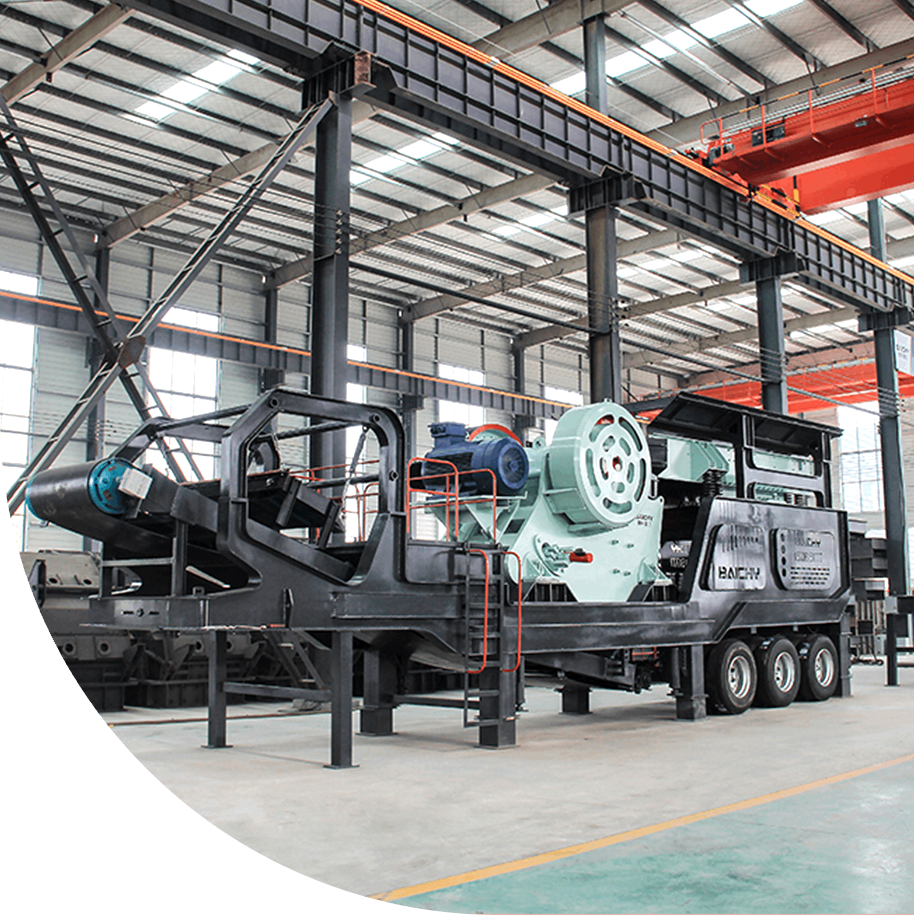
• Mobile suits demolition, not recycling. If the rubble is going to be crushed where it falls and then leave site, a tracked plant earns its cost by removing haulage. Its weakness is that it cannot pre-sort properly, so the product is a lower grade.
• Fixed suits a reception business. If you are paid to take material in, the volume is steady and the product has to meet a specification, which needs the buildings, the pre-sort floor and the stockpile space a mobile unit does not have.
• A mobile primary feeding a fixed secondary is a real answer. It keeps the reduction where the material is bulky and the grading where the control is, which is often cheaper than either pure option.
• And the deciding question is not capital cost. It is how many times the material is handled between the gate and the stockpile. Every extra handling step costs money per tonne forever, and mobile plants add handling steps.

V. Design Backwards From the Acceptance Test
Every recycled aggregate market has a test the buyer will run — usually a grading envelope, a limit on fines or lightweight material, sometimes a sulphate or chloride limit. That test, not the crusher's rated output, is the thing to design against.
• Get the specification in writing first. Then choose the separation steps that satisfy it, then the crushing stages that reach its grading, then the tonnage.
• Ask what the buyer rejects most often. In most markets it is oversize and lightweight contamination, which points at screening area and air separation rather than at a bigger crusher.
• Plan for two products, not one. A plant that can only make one grade has to sell everything at the lowest price the batch allows. Splitting the output lets the good material be sold as good material.
• Budget the residue. Soil, fines and light waste all need somewhere to go, and the cost of that disposal is part of the plant's economics from the first tonne.
• And assume the feed will get worse. A plant designed for clean concrete will meet renovation waste within a year. Build in the pre-sort capacity while the civils are being poured, because retrofitting a tipping hall is far more expensive than making it wider at the start.
Frequently Asked Questions About C&D Waste Recycling
Q: Can I just use a mobile jaw crusher for construction waste?
A: For demolition arisings that leave the site, yes. For producing recycled aggregate to a specification, no — the missing piece is pre-sort and separation, not crushing capacity, and a mobile unit cannot provide those at the same grade.
Q: Is a hammer crusher or a jaw crusher better for rubble?
A: It depends on what you are making. A jaw tolerates rebar and produces a blocky output suited to base and sub-base; an impact gives a better-shaped, more saleable aggregate but is far more sensitive to metal and to fines. The pre-sort quality decides whether the impact option is realistic.
Q: How much contamination can the plant tolerate?
A: That is a question about your specification, not about the machine. Ask the buyer what limit the acceptance test applies to fines, lightweight material and sulphate, then design the removal steps around those limits.
Q: Do I need a washing plant?
A: Only if the market you sell into requires washed material or your feed is high in clay and soil. Washing improves grade and costs water, power and a residue stream to manage — it is a market decision before it is a technical one.
For crushing and screening equipment arranged around demolition arisings and recycled aggregate, see the crushing and screening range.