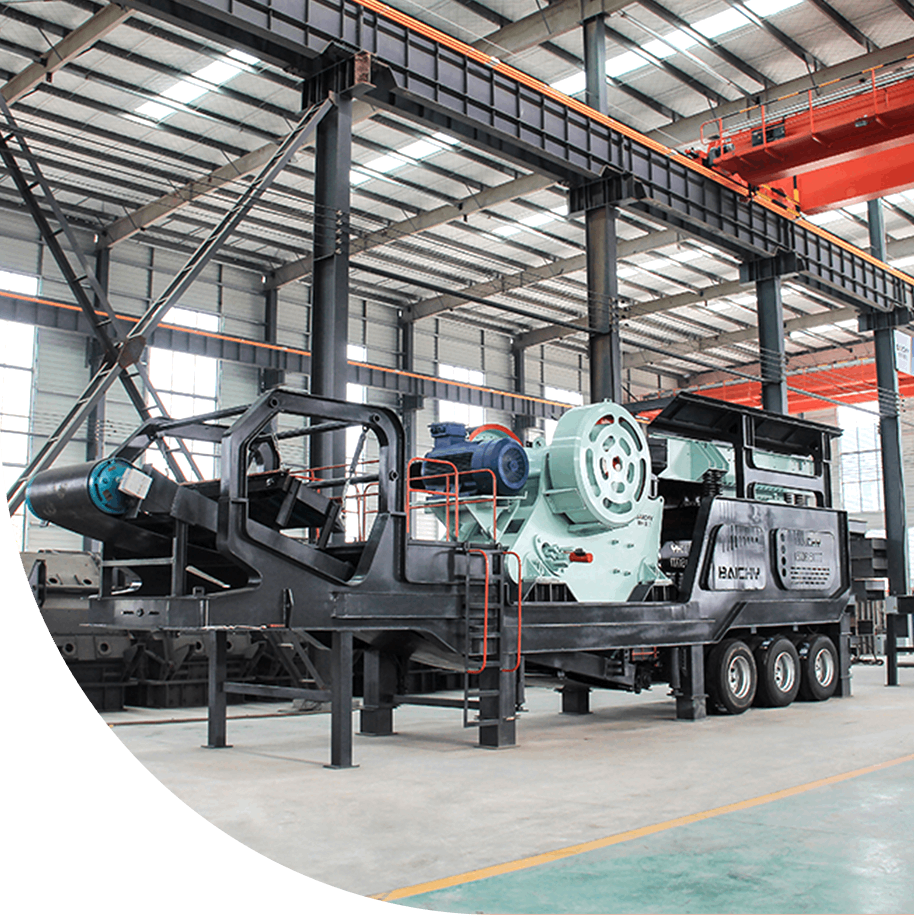
Mining projects are becoming more dynamic as ore bodies shift and contractors seek faster project deployment. Fixed crushing plants frequently require heavy civil engineering work and long installation periods, limiting operational flexibility. As a result, mobile crushing technology is gaining popularity worldwide. Wheel-mounted crushing plants provide an effective balance between productivity and mobility, enabling operators to process materials closer to extraction zones and reduce transportation expenses.
I. Tire-Type Jaw Crusher Handling Primary Crushing
The first stage of the production system features a wheel-mounted jaw crusher designed for primary material reduction. Large rocks and hard ores are efficiently processed through a deep crushing chamber and heavy-duty jaw plates. The tire-mounted configuration allows the equipment to be transported quickly between project sites while maintaining strong crushing performance. This design is particularly effective for granite, basalt, iron ore, and other hard rock applications common in mining operations.
II. Wheel-Mounted Cone Crusher Delivering Precision Secondary Crushing
Following primary reduction, the tire-type cone crusher performs secondary crushing and material refinement. Its advanced crushing principle and high compression force produce well-graded aggregates with stable particle size distribution. Compared with traditional secondary crushing systems, the wheel-mounted cone crusher offers improved efficiency, lower wear rates, and consistent product quality. This makes it suitable for producing premium aggregates and finely crushed mineral products.
III. Integrated Mobility Creating Operational Flexibility
One of the major advantages of combining wheel-mounted jaw and cone crushers is mobility. Both units can be relocated rapidly using tractor trucks, reducing downtime between project phases. Hydraulic support systems and compact transport dimensions further simplify site setup. Instead of investing in permanent infrastructure, mining operators can establish temporary or semi-mobile crushing operations that move together with the mining face or project development.
IV. Lower Operating Costs and Improved ROI
Cost control remains a priority for mining companies worldwide. The mobile jaw and cone crusher combination reduces infrastructure investment, transportation expenses, and installation costs compared with traditional fixed plants. Optimized material flow between the two stages improves crushing efficiency and lowers energy consumption per ton of processed material. Reduced downtime and simplified maintenance further contribute to stronger return on investment and improved equipment utilization.
The
wheel-mounted jaw and cone crusher solution is suitable for a broad range of industries and materials. Quarry operators use the system for aggregate production, while mining companies rely on it for processing granite, limestone, basalt, iron ore, and various metallic ores. Whether operating in remote mines, road construction projects, or commercial quarries, this mobile crushing configuration provides a dependable and adaptable processing solution.
Frequently Asked Questions About wheel-mounted jaw and cone crusher plant
Q: What materials can this mobile crushing plant process?
A: The system can process granite, basalt, limestone, iron ore, and other hard rock or mineral materials.
Q: Why choose wheel-mounted crushers over stationary plants?
A: Wheel-mounted crushers provide easier transportation, faster setup, lower infrastructure costs, and greater flexibility.
Q: Is the tire-type crusher plant suitable for mining projects?
A: Yes. Its mobility and strong crushing performance make it highly suitable for mining, quarrying, and infrastructure applications.
Enhance Your Material Handling Efficiency Today – Contact Our Experts for Customized solutions.