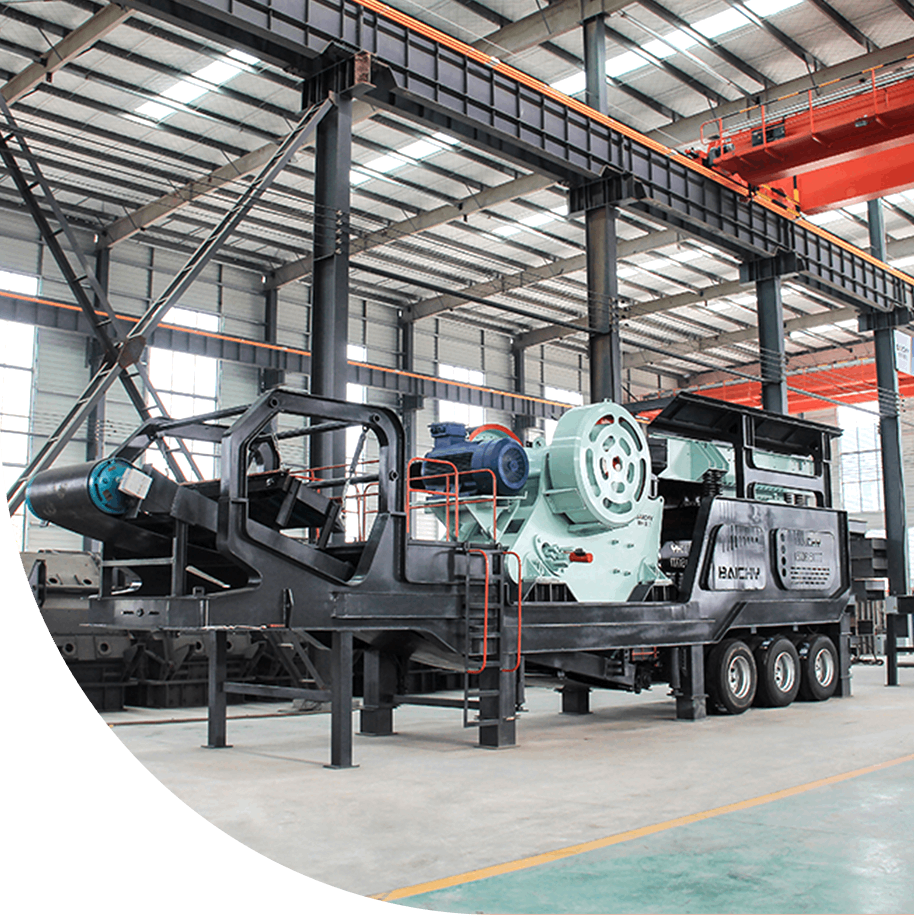
Global infrastructure construction, highway expansion, water conservancy engineering and urban renovation projects are continuously advancing, with many construction sites located in mountainous regions, hilly remote zones and areas lacking complete supporting civil works. Conventional stationary sand production lines require large-scale concrete foundation pouring, steel frame installation and long-distance material conveying paving before formal operation, which consume massive time, labor and capital. In contrast, mobile sand making plants break the geographical and construction restrictions of fixed production lines. Operators only need to transport the whole equipment to the raw material yard, and they can launch formal aggregate and manufactured sand production within a short period. This flexible production mode perfectly matches the scattered, short-cycle and movable construction characteristics of modern engineering projects, driving the market demand for mobile sand production solutions to keep rising year by year.
I. Integrated Design Improves Production Efficiency
The whole set of mobile sand making plant adopts highly integrated all-in-one structural layout, organically combining feeding bin, primary crushing unit, vertical shaft impact sand making host, multi-layer vibrating screening machine, belt conveying system and dust removal device into a single mobile chassis. Compared with split fixed equipment that needs independent installation of each module, the integrated design greatly shortens the transfer distance of stone materials between crushing, sand making and screening links. It eliminates repeated lifting and secondary transportation of raw materials, cuts down material loss and power consumption generated in transit, effectively boosts hourly output of manufactured sand, and comprehensively reduces long-term daily operation and maintenance costs for mine and construction enterprises.
II. Strong Adaptability to Different Working Environments
Mobile sand making plants possess outstanding environmental and raw material adaptability, capable of handling diversified processing demands across multiple industrial scenarios. When deployed in mountain open-pit mines, it can process hard granite, basalt, iron ore and other high-hardness rock materials; at river gravel yards, it completes sorting, crushing and shaping of cobblestone, river pebble raw materials to produce high-quality finished sand; for urban construction waste resource recycling projects, the equipment can crush waste concrete, waste brick and stone, regenerate recycled aggregate and recycled manufactured sand. No matter harsh high-altitude, muddy or narrow site conditions, the equipment can adjust processing parameters to match different raw material hardness, particle size standards and finished sand gradation requirements.
III. Quick Installation and Easy Transportation
The complete mobile sand making equipment is equipped with two mainstream chassis types: crawler chassis and wheeled chassis to satisfy different road and site transportation needs. Wheeled mobile units can be towed by heavy trucks for long-distance highway transfer between different construction sites; crawler-type models rely on self-propelled walking systems, freely moving in rugged mountain roads, muddy mining areas and unhardened temporary yards without additional traction vehicles. Unlike fixed production lines that require 7–15 days of foundation construction and equipment assembly, mobile sand making plants finish all pre-assembly work in the factory. After arriving at the working site, operators only need simple pipeline connection and debugging, which shortens the whole installation cycle to 1–3 days and greatly improves project turnover efficiency.
IV. Intelligent Control System Ensures Stable Operation
All new-generation
mobile sand making plants are equipped with full PLC intelligent automatic control systems, matched with touch screen operation panels and real-time data transmission modules. Operators can view core operating indicators including host current, feeding volume, crushing cavity temperature and finished sand output on-site or via remote terminals. The system supports automatic fault early warning, real-time fault diagnosis and one-click parameter adjustment for crushing and sand making links. Once abnormal vibration, overload feeding or lubrication failure occurs, the control system will send alarm signals in advance and execute automatic protection shutdown to avoid equipment damage. The intelligent control mode reduces manual intervention, stabilizes continuous production and lowers hidden safety hazards on site.
As mining and construction project customization demands keep growing, mobile sand making production systems are accelerating the transformation to standardized modular design. Manufacturers split the whole production flow into independent functional modules including coarse crushing module, medium-fine crushing module, sand shaping module, screening module and dedusting module. Clients can freely combine and match different functional modules according to their own project raw material characteristics, target output, finished aggregate standards and site space limitations. Modular mobile equipment features flexible combination, easy disassembly and upgradeable configuration, which can adapt to ever-changing project demands. Industry insiders predict that modular integrated mobile sand and stone processing solutions will occupy a dominant position in the mine equipment market in the next few years.
Frequently Asked Questions About Mobile Sand Making Plant
Q: What scenarios are mobile sand making plants suitable for?
A: Mobile sand making equipment can be used for hard rock processing in open-pit mines, river pebble sand production, construction waste recycling, highway, railway, water conservancy and urban municipal engineering temporary aggregate processing. It adapts to scattered construction sites, short-cycle projects and areas without fixed infrastructure.
Q: What are the differences between crawler-type and wheeled mobile sand making machines?
A: Wheeled models need a tractor for long-distance highway transportation, with lower overall cost, ideal for flat road construction sites. Crawler machines are self-propelled, capable of walking on muddy, rugged mountain roads without traction vehicles, better for remote mines and complex terrain, yet the price is relatively higher.
Q: Does the mobile sand making plant require foundation construction before operation?
A: Unlike fixed sand production lines that need concrete foundation pouring, integrated mobile sand plants complete pre-assembly in factory. Users only need flat ground, simple pipeline connection and debugging, no large-scale civil construction, and can put into production within 1–3 days after arrival.
Enhance Your Material Handling Efficiency Today – Contact Our Experts for Customized solutions.