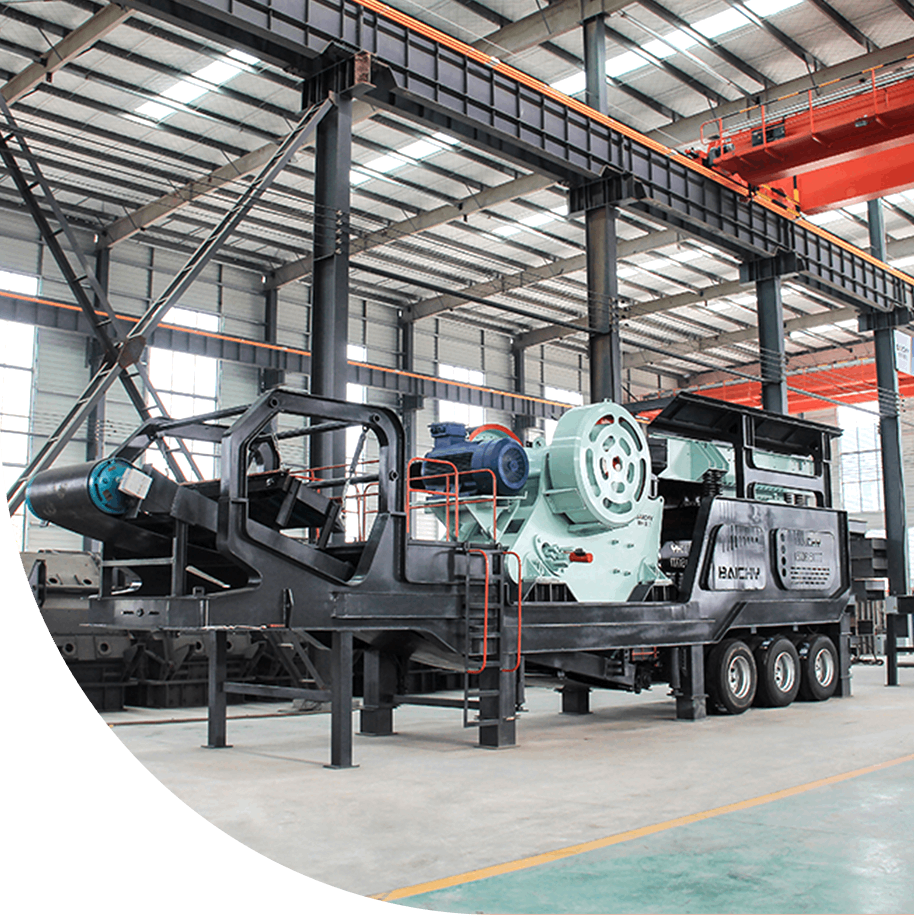
Modern jaw crushers are increasingly incorporating automated and intelligent control systems to improve crushing process management. These systems can monitor operating parameters such as material conditions, crushing load and equipment status in real time, allowing operators to adjust production conditions more efficiently. Intelligent monitoring can help maintain stable operation, reduce unnecessary interruptions and support more consistent equipment performance.
Advances in crushing chamber design have improved the material reduction efficiency of modern jaw crushers. Optimized chamber geometry and improved mechanical performance allow the equipment to apply crushing force more effectively to incoming materials. At the same time, improvements in drive and power systems can help reduce unnecessary energy consumption, supporting higher production efficiency and better operating economics for mining and aggregate processing plants.
I. Environmental Performance Becomes Part of Crusher Development
Environmental requirements are becoming an increasingly important consideration in crushing equipment development. Modern jaw crusher systems can be integrated with dust suppression, dust collection and noise-control measures to help create a cleaner working environment. In addition, efficient material utilization and the recycling of suitable construction and demolition waste are encouraging the application of crushing equipment in more sustainable material processing operations.
II. Changing Market Requirements Expand Jaw Crusher Applications
Growing demand for aggregates and construction materials is creating new opportunities for jaw crusher applications, particularly in developing mining and infrastructure markets. Different projects require equipment to handle varying material hardness, feed sizes and production conditions. As a result, manufacturers are developing jaw crusher models with broader material adaptability and more flexible configurations for different quarrying, mining and construction environments.
| Parameter |
Specification / Description |
| Equipment Type |
Jaw Crusher |
| Main Applications |
Mining, quarrying, aggregate production and construction |
| Processing Materials |
Granite, basalt, quartz, limestone, ores and other hard rocks |
| Principle |
Compression crushing between movable and fixed jaw plates |
| Crushing Stage |
Primary crushing |
| Finished Material |
Crushed stone and material suitable for secondary processing |
| Key Advantages |
Strong crushing capability, durable structure, flexible application and stable operation |
III. Jaw Crusher Technology Moves Toward More Efficient Production
The ongoing development of jaw crusher technology is contributing to changes in modern crushing operations. Improvements in automation, crushing efficiency, energy utilization and environmental control are helping plants achieve more stable and efficient material processing. These developments also provide mining and aggregate producers with more options when upgrading existing crushing systems or planning new production lines.
IV. Choosing the Right Jaw Crusher for Long-Term Performance
Selecting a suitable
jaw crusher requires consideration of material hardness, maximum feed size, required capacity, final product requirements and the configuration of the complete crushing line. Different jaw crusher models are designed for different operating conditions, so equipment selection should be based on actual production requirements rather than capacity alone. A properly configured jaw crusher can provide reliable primary crushing performance while supporting long-term production efficiency and manageable operating costs.
Frequently Asked Questions About the Jaw Crusher
Q: What is the main function of a Jaw Crusher?
A: A Jaw Crusher is a primary crushing machine that uses compression between a movable jaw plate and a fixed jaw plate to reduce large rocks and ores into smaller sizes.
Q: What materials can a Jaw Crusher process?
A: Jaw Crushers can process various hard and abrasive materials, including granite, basalt, quartz, limestone, ores and other suitable rocks.
Q: What determines Jaw Crusher capacity?
A: Capacity depends on the crusher model, feed size, material hardness, feed characteristics, discharge setting and overall plant configuration.
Enhance Your Material Handling Efficiency Today – Contact Our Experts for Customized solutions.