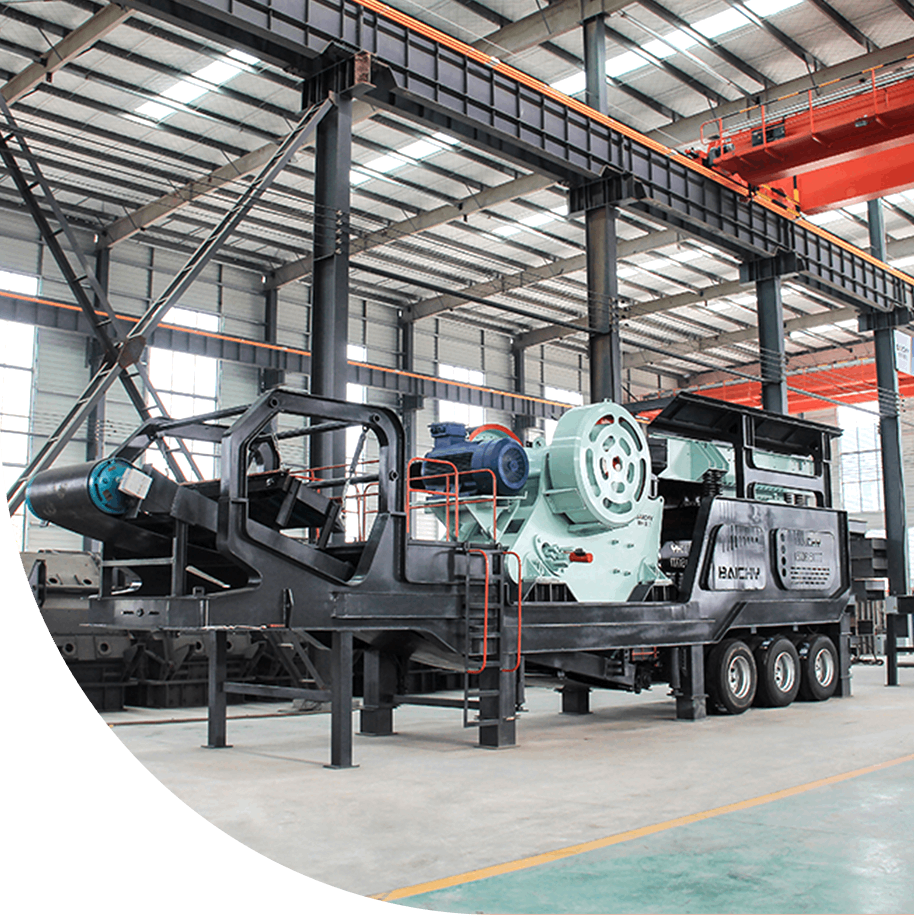
Impact crushers are versatile and efficient machines used to break down materials through high-speed impact forces. They are essential in the production of aggregates for construction, mining, and recycling. The crusher uses hammers or blow bars that strike the material, causing it to fracture. This process makes impact crushers ideal for producing fine materials with a uniform particle size.
I. How Impact Crushers Work
An impact crusher operates by using a rotor that rotates at high speeds. When materials enter the crusher, they are struck by the blow bars or hammers. The force of the impact causes the material to break into smaller particles. The resulting particles are then processed further as they pass through the crusher, allowing for both coarse and fine materials to be produced. Depending on the design, impact crushers can create various particle sizes.

II. Summary of the Benefits of Impact Crushers
Impact crushers offer several key advantages, including efficient material processing, energy savings, versatility, and consistent output. They quickly break down materials into smaller particles, improving production efficiency. Additionally, their lower energy consumption makes them an economical choice for large-scale operations. Impact crushers can handle a variety of materials and produce a uniform particle size, which is crucial for industries like construction and asphalt production.
III. Summary of the Applications of Impact Crushers
Impact crushers are essential across various industries, including mining, construction, recycling, and chemicals. In mining, they are used for breaking down ores and minerals for efficient processing. In construction, they produce aggregates such as sand, gravel, and crushed stone for concrete and asphalt. In recycling, impact crushers process waste materials like concrete and asphalt for reuse. They are also used in the chemical industry to break down bulk materials like salts and gypsum.

IV. Choosing the Right Impact Crusher for Your Needs
When selecting an impact crusher, consider factors such as the material to be processed, desired particle size, and production capacity. Impact crushers come in different sizes and configurations, and choosing the right one for your needs is essential for optimizing performance and efficiency. Understanding rotor speed, feed size, and wear part types will also help in making the best choice for your application.
Regular maintenance is critical to keeping impact crushers operating efficiently. Essential maintenance tasks include checking and replacing worn-out blow bars, ensuring proper lubrication for rotors and bearings, cleaning the machine to prevent blockages, and regularly inspecting key components like the motor and gearbox. Routine maintenance helps extend the crusher's lifespan and ensures consistent, reliable performance.
Q: Why are impact crushers important in material processing?
A: Impact crushers are crucial because they provide a high-efficiency solution for breaking down a wide variety of materials quickly. Their ability to produce consistent, uniform particle sizes makes them essential in industries such as construction, mining, and recycling.
Q: How do impact crushers save energy?
A: Impact crushers are designed to be energy-efficient. They process materials in a single step, reducing the need for multiple crushing stages and helping to lower overall energy consumption.
Q: What are the main industries that use impact crushers?
A: Impact crushers are used in the mining, construction, recycling, and chemical industries. They are widely employed for processing materials like rocks, ores, concrete, and bulk chemicals.