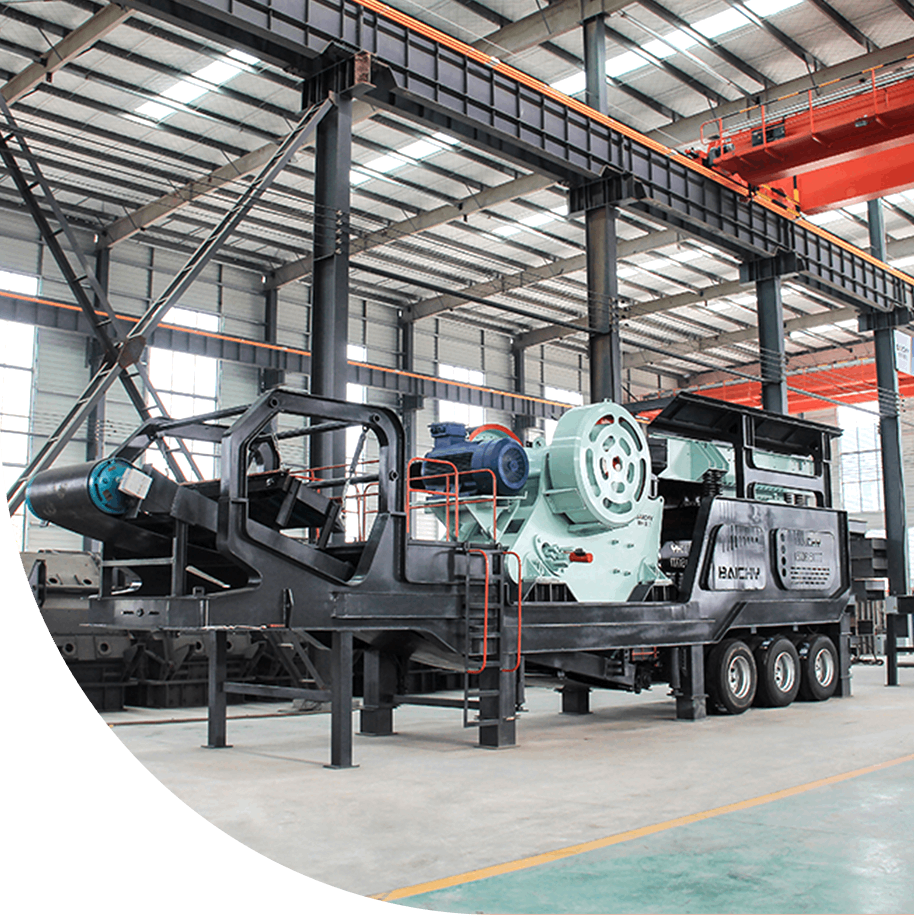
As the global mining and construction industries continue to demand more efficient equipment, the Jaw Crusher, as one of the core crushing devices, has entered a new era of technological innovation and functional enhancement. The innovations in jaw crushers not only improve the efficiency of mining operations but also help reduce energy consumption and operational costs. This article will delve into the current technological advancements of jaw crushers and analyze how these innovations are driving the transformation of the entire industry.
I. The introduction of automated and intelligent control systems
Modern jaw crushers not only have strong crushing capabilities but also begin to integrate automated and intelligent control systems. These systems can monitor various parameters during the crushing process in real time, such as material size, crushing load, and equipment operating status, automatically adjust the equipment to maintain the optimal working condition. This intelligent management not only improves the operational efficiency of the equipment but also extends its service life.


II. More efficient crushing capability and energy-saving design
The latest jaw crusher adopts an innovative crushing chamber design, making the crushing process more efficient. Each impact of the crusher achieves more precise material fragmentation, significantly improving the crushing ratio and production capacity. At the same time, the energy-saving design of the equipment reduces energy consumption by optimizing the working efficiency of the motor and hydraulic system, saving a large amount of operating costs for mining enterprises.
III. Application of environmental protection technology
As global concern for environmental protection continues to grow, jaw crushers are also striving to achieve more environmentally friendly operations. The new generation of crushers employs low-noise and low-emission technologies, reducing their impact on the environment. In addition, the design of the equipment takes into account the recycling and reuse of waste materials, further reducing the environmental burden of mining production.
IV. Industry demand drives innovative development
With the surge in demand for construction materials in emerging markets, particularly in Asia and Africa, the jaw crusher market is experiencing growth opportunities. To meet the needs of these markets, manufacturers are continuously driving technological innovation to develop crushers that better align with modern mining requirements. For example, new jaw crushers offer a broader range of material adaptability to accommodate different geological conditions, enabling effective processing of harder and more complex ores.
The technological innovation of jaw crushers has not only changed the production methods of the mining industry but also promoted the entire industry to develop towards more efficient and environmentally friendly directions. With the continuous introduction of new technologies, jaw crushers will continue to play a crucial role in global mining and construction industries. For mining companies, investing in advanced equipment will bring them higher production efficiency and lower operating costs.
Q: What is the working principle of a jaw crusher?
A: A jaw crusher works by driving a movable jaw plate (the "moving jaw") back and forth against a stationary jaw plate (the "fixed jaw"). When the movable jaw moves closer to the fixed jaw, the material is crushed by compression. As the movable jaw moves away, the crushed material is discharged. This continuous cycle allows for the crushing of materials.
Q: Which industries and materials are jaw crushers suitable for?
A: Jaw crushers are widely used in industries like mining, construction, and chemical processing. They are suitable for crushing hard materials such as quartz, granite, limestone, coal, and other minerals. They are primarily used for primary crushing in mining and construction projects.
Q: How do you maintain a jaw crusher to extend its lifespan?
A: To maintain a jaw crusher, regularly check the condition of key components like the movable jaw, fixed jaw, and crushing plates, and replace worn-out parts as needed. Ensure proper lubrication, clean the equipment frequently, and check the electrical and drive systems for any issues.
Q: What is the production capacity of a jaw crusher?
A: The production capacity of a jaw crusher depends on the model and material characteristics. Typically, jaw crushers can produce from tens to hundreds of tons per hour. The specific production rate should be matched with the material type and operational requirements.
Q: What factors should be considered when choosing a jaw crusher?
A: When selecting a jaw crusher, consider factors such as the hardness and particle size of the material, production capacity, energy efficiency, equipment durability, and after-sales service. Choosing the right model and configuration based on the application is crucial for ensuring efficient operation.