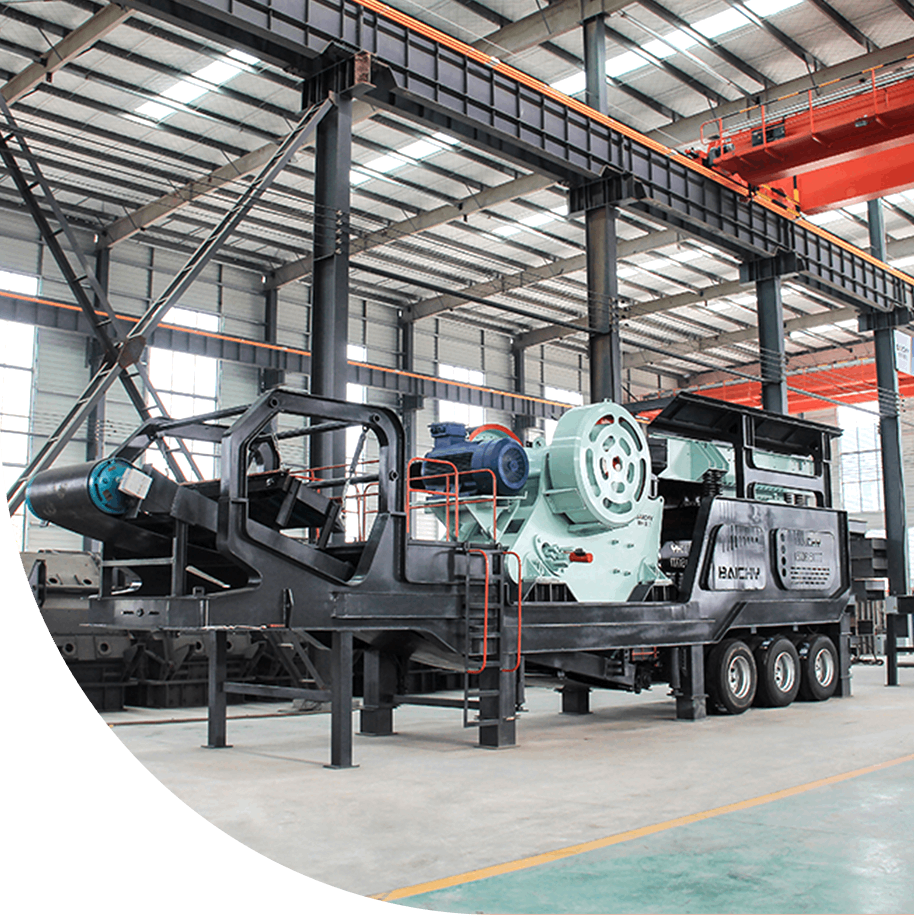
Selecting the wrong jaw crusher or misestimating its production capacity can cause actual output to drop to as low as 70% of the design target, resulting in significant daily shortfalls and potential financial losses. For medium-scale granite production lines, this could mean a daily deficit of over 1,000 tons, directly affecting project schedules, profitability, and client commitments, highlighting the importance of accurate capacity planning for investment assurance.
I. Theoretical Capacity Range of PE600×900 Jaw Crusher
The PE600×900 jaw crusher offers a theoretical throughput of 100–180 TPH, depending on feed size, rock hardness, and operational parameters. For instance, granite with a Mohs hardness of 14 achieves 120–160 TPH, while softer limestone can reach 140–180 TPH. Maintaining uniform feed, correct discharge settings, and optimal motor power is essential to approach the upper limit of its design capacity, ensuring maximum efficiency in aggregate production.
II. Real Project Case: Southeast Asia Granite Crushing Line
A Southeast Asian granite project demonstrated the PE600×900’s capability to deliver stable real-world performance of 165 TPH under controlled conditions, with feed sizes below 450 mm and discharge set at 120 mm. Operating 20 hours daily over 300 days, the line achieved an annual output of 495,000 tons, demonstrating that with proper configuration and operational discipline, the machine consistently meets high-volume production requirements while minimizing downtime and operational risk.
III. Comparison With Other Jaw Crusher Models
When compared to similar models, the PE600×900 strikes an optimal balance between production capacity, energy consumption, and operational efficiency. For medium-scale granite operations, it outperforms PE500×750 in throughput and offers cost-effective performance relative to larger PE750×1060 units. Such comparisons assist decision-makers in selecting the most suitable equipment to match project scale, material characteristics, and return-on-investment expectations.
IV. Three Key Methods to Improve PE600×900 Capacity
Operators can maximize the PE600×900’s real output by focusing on three key practices: strictly controlling feed size through pre-screening, maintaining the discharge opening within an optimal range to ensure smooth downstream processing, and performing timely wear-part maintenance to prevent efficiency losses. Implementing these measures ensures the crusher operates close to its rated capacity while reducing downtime and extending service life.
Understanding the
PE600×900 jaw crusher’s performance characteristics allows engineers and project planners to design highly efficient crushing systems. When combined with secondary crushers like impact or cone crushers, it enables continuous, high-quality aggregate production with stable throughput. This strategic approach not only maximizes ROI but also provides long-term operational reliability and flexibility for modern stone and sand production lines.
Frequently Asked Questions About PE600×900 Jaw Crusher Capacity and Performance
Q: Why is actual capacity lower than theoretical capacity?
A: Actual output is affected by feed size, material hardness, equipment wear, and operational stability. Poor feed control or worn jaw plates can significantly reduce capacity.
Q: Can PE600×900 really reach 165 TPH in real projects?
A: Yes. In optimized granite crushing conditions, stable output of 160–165 TPH has been achieved in real Southeast Asia project cases.
Q: What equipment pairs best with PE600×900?
A: It works best with secondary crushers such as impact crushers (PF series) or cone crushers, forming a complete crushing and sand production line.
Enhance Your Material Handling Efficiency Today – Contact Our Experts for Customized solutions.