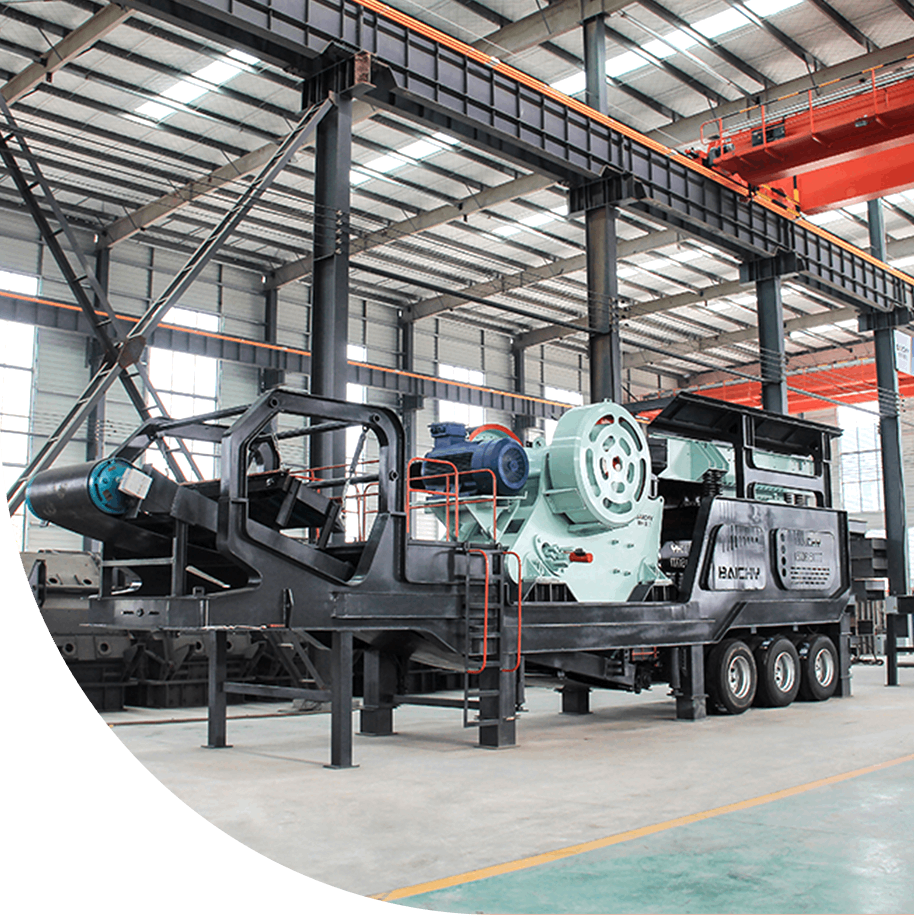
Primary crushing is the first stage of reducing raw materials into manageable sizes. It prepares materials for further processing in secondary and tertiary crushers. Effective primary crushing improves overall production efficiency, reduces equipment wear, and ensures consistent material flow for downstream operations.
I. Jaw Crushers in Primary Crushing
Jaw crushers are commonly used for primary crushing of hard, abrasive rocks. They employ compressive force to break large stones into smaller, uniform pieces. Known for durability and high crushing ratio, jaw crushers handle materials like granite, basalt, and iron ore effectively. Their simple structure allows for easy maintenance and long service life, making them ideal for heavy-duty primary crushing applications.
II. Impact Crushers in Primary Crushing
Impact crushers operate using high-speed impact to crush materials. While often used for secondary crushing, impact crushers can also serve as primary crushers for softer or less abrasive rocks such as limestone. They produce uniform particle sizes and cubical shapes, which are advantageous in concrete and asphalt production. Impact crushers offer higher reduction ratios for specific materials, providing flexibility in primary crushing operations.
III. Material Suitability Comparison
Jaw crushers excel with hard, abrasive materials, resisting wear and maintaining high throughput. Impact crushers are better suited for softer, non-abrasive rocks and can handle materials with higher moisture content. Understanding the material properties ensures that the selected crusher delivers optimal performance and reduces maintenance costs over time.
IV. Efficiency and Production Considerations
Jaw crushers typically provide steady, high-capacity output with low maintenance. Impact crushers can produce more uniform, shaped aggregates but may require more frequent wear part replacements. Selecting the right crusher depends on desired output size, material type, and production volume, ensuring efficiency in primary crushing while minimizing operational costs.
When choosing between
jaw and impact crushers, consider material hardness, abrasiveness, desired particle shape, production capacity, and operational flexibility. For hard, abrasive rocks and heavy-duty applications, jaw crushers are preferred. For softer materials requiring cubical shapes, impact crushers are more suitable. Proper selection ensures consistent production, reduced downtime, and improved overall plant efficiency.
Frequently Asked Questions About Jaw Crushers and Impact Crushers in Primary Crushing
Q: Can impact crushers be used as primary crushers?
A:Yes, impact crushers can serve as primary crushers for softer or less abrasive materials, producing uniform, cubical aggregates.
Q: Which materials are best suited for jaw crushers in primary crushing?
A: Hard, abrasive materials like granite, basalt, and iron ore are ideal for jaw crushers due to their compressive strength and durability.
Q: What are the main advantages of using jaw crushers in primary crushing?
A: Jaw crushers provide high crushing ratios, durability, steady output, low maintenance, and long service life.
Enhance Your Material Handling Efficiency Today – Contact Our Experts for Customized solutions.