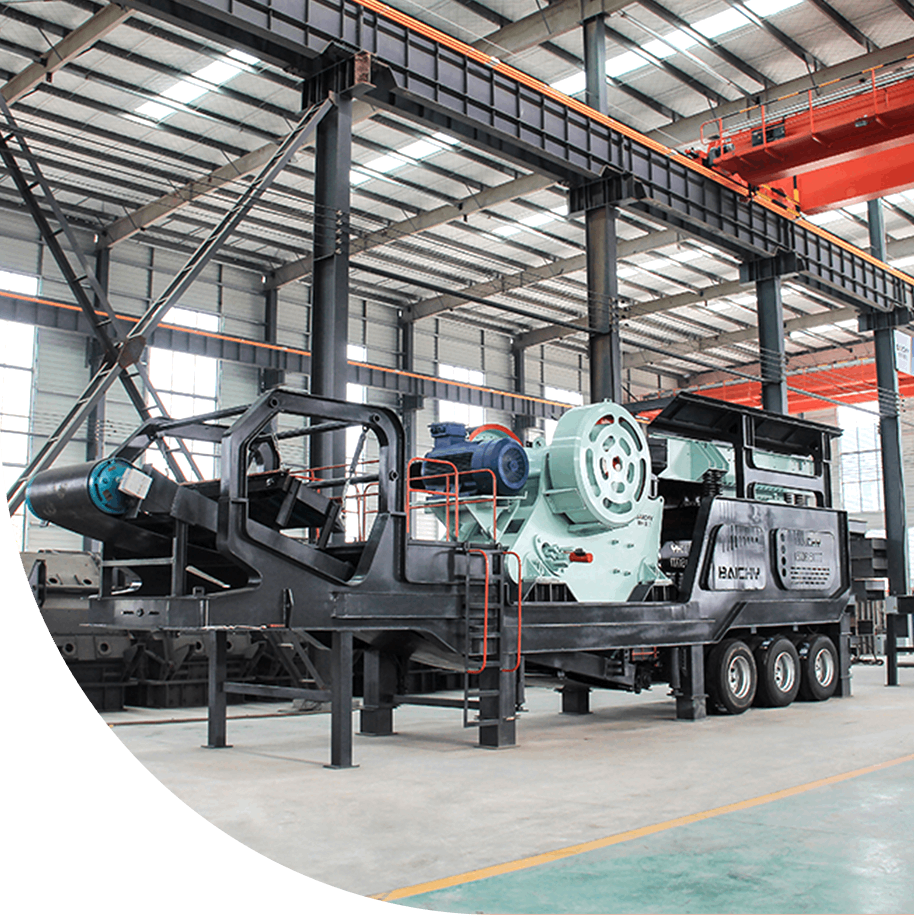
A crawler screening plant is a mobile, track-mounted unit designed for screening and separating materials on-site. Unlike stationary plants, crawler screening units are highly portable and can be easily moved across different job sites. These plants are equipped with vibrating screens and conveyors that allow them to separate materials into various sizes, enhancing material sorting and reducing the need for manual labor. Crawler screening plants are commonly used in mining, construction, and recycling operations to sort materials like gravel, sand, rocks, and demolition debris.
I. Key Features of Crawler Screening Plants
Crawler screening plants are equipped with features that enhance their mobility and efficiency. The track-mounted design allows them to be easily transported between job sites, while the powerful vibrating screens handle large volumes of material, improving throughput. They are also customizable to suit specific processing needs and require minimal maintenance, ensuring consistent operation.

II. How Do Crawler Screening Plants Work?
Crawler screening plants operate by feeding raw materials onto a vibrating screen. As the material passes through the screen, it is sorted into different sizes. The larger particles are separated and moved to a different location, while the finer particles are filtered out through the mesh. The conveyor system then carries the sorted materials to different areas for further processing or storage. Crawler screening plants can be adjusted for different types of material, making them versatile for various applications, from mining and construction to recycling.
III. Applications of Crawler Screening Plants
Crawler screening plants are used across various industries, including mining, construction, and recycling. In mining, they help sort minerals and ores extracted from mines, while in construction, they efficiently process materials like gravel, sand, and crushed stone for aggregate production. In recycling, they are instrumental in sorting construction debris, demolition waste, and other recyclable materials.

IV. Benefits of Using Crawler Screening Plants
These mobile screening units provide increased efficiency by allowing on-site screening, reducing transportation costs and speeding up the material processing. Their mobility offers flexibility for operations in different locations, making them a cost-effective solution. Additionally, crawler screening plants help improve material recovery by sorting materials into different grades, ensuring higher-quality final products.
Investing in a crawler screening plant is essential for operations that require flexibility and efficiency in material processing. These mobile plants provide significant advantages in terms of productivity, mobility, and cost-effectiveness. By offering the ability to screen materials on-site, they reduce transportation and handling costs, improve material recovery, and ensure that your operations remain efficient even in remote or difficult-to-access locations.
Q: What materials can be processed by a crawler screening plant?
A: Crawler screening plants can process a wide range of materials, including sand, gravel, crushed stone, rocks, construction debris, demolition waste, and minerals. They are suitable for use in mining, construction, and recycling operations.
Q: How does a crawler screening plant improve operational efficiency?
A: By enabling on-site screening and material sorting, crawler screening plants reduce the need for transporting raw materials to stationary screening plants. This increases throughput, decreases transportation costs, and ensures faster processing times.
Q: Can a crawler screening plant be used in remote locations?
A: Yes, the track-mounted design of crawler screening plants makes them highly portable and able to operate in remote or difficult-to-reach locations. Their mobility allows them to be moved easily between different job sites.