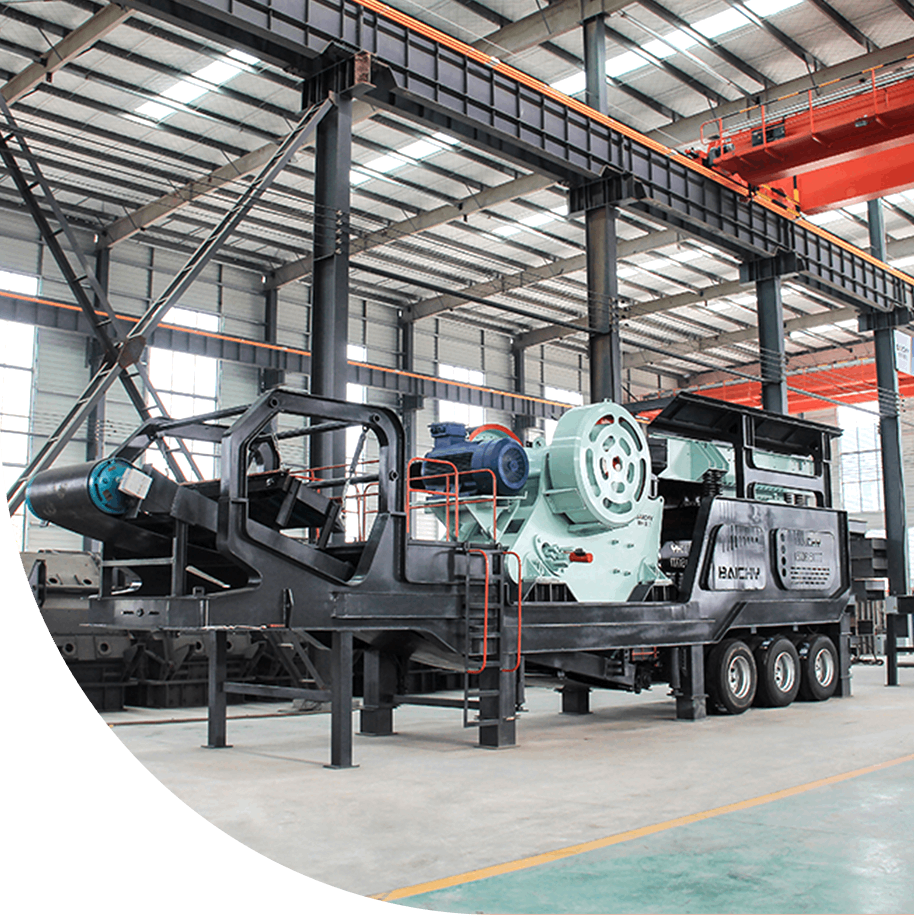
Crawler crushing and screening units are track-mounted mobile crushers and screens that provide versatile solutions for material processing. These systems are designed for high mobility, allowing operators to move easily between different job sites without the need for a stationary installation. They combine the functions of crushing and screening in one unit, making them efficient for aggregate production, recycling, and mining operations. With their crawler tracks, they can operate in challenging terrains where other equipment might struggle, making them ideal for remote locations.
I. How Crawler Crushing and Screening Works
Crawler crushing and screening plants consist of a mobile crusher and a screening unit mounted on tracks. The crusher component is responsible for breaking down large materials into smaller particles, while the screening unit sorts the crushed material into different sizes. The crawler tracks allow the unit to move easily between locations, and the equipment can operate in both wet and dry conditions. The combination of crushing and screening capabilities ensures that the process is streamlined and highly efficient, eliminating the need for separate stationary crushers and screens.

II. Advantages of Crawler Crushing and Screening
Crawler crushing and screening equipment offers high mobility, allowing operators to move easily between job sites. These units combine both crushing and screening functions in one compact system, saving space and reducing the need for additional equipment. They are efficient, cost-effective, and capable of operating in rugged terrains, making them ideal for remote locations. Their versatility and ability to process materials on-site minimize transportation costs, while their durable construction ensures reliable performance even in challenging environments.
III. Applications of Crawler Crushing and Screening
Crawler crushing and screening units are used across multiple industries, including mining, construction, and recycling. In mining, they crush ores and minerals on-site, reducing transportation costs. In construction, they produce aggregates like sand and gravel for roadwork and infrastructure projects. Additionally, they are utilized in recycling to process construction waste, transforming it into reusable aggregates. The equipment is also valuable in quarrying, where it efficiently processes stones into various sizes for construction use.

IV. Choosing the Right Crawler Crushing and Screening Equipment
Choosing the right crawler crushing and screening equipment depends on several factors, including the type of materials being processed, the required output size, and the terrain of the worksite. Different models offer various features, such as varying levels of screening capacity, different crusher types, and additional options for material handling. Ensuring the right specifications match the operational requirements ensures efficient performance and high productivity.
Regular maintenance is crucial for ensuring the longevity and efficiency of crawler crushing and screening units. This includes inspecting and lubricating the moving parts, cleaning the equipment to prevent material buildup, and replacing any worn-out components such as screens, belts, or hammers. It's also important to monitor the settings of the crusher and screen, ensuring they meet operational needs, and to adjust the equipment as necessary to maintain optimal performance.
Q: Where are crawler crushing and screening units used?
A:They are used in mining, construction, recycling, road building, and quarrying, where they process materials like ore, stone, sand, gravel, and construction waste.
Q: How should I maintain crawler crushing and screening equipment?
A: Regular maintenance includes inspecting and lubricating moving parts, cleaning the equipment, replacing worn parts, and monitoring settings to ensure optimal performance.
Q: What are the advantages of using crawler crushing and screening equipment?
A: These systems are mobile, cost-effective, space-saving, and provide high efficiency. They can operate in rugged terrains, process materials on-site, and reduce the need for additional equipment and infrastructure.